contact US!

Use the form on the right to contact us.

Texas Early Music Project

PO Box 301675

Austin, TX 78703

(512) 377-6961

For ticket and concert venue inquiries, email the Box Office


PO Box 301675
Austin, TX 78703
United States

(512) 377-6961

Founded in 1987 by Daniel Johnson, the Texas Early Music Project is dedicated to preserving and advancing the art of Medieval, Renaissance, Baroque, and early Classical music through performance, recordings, and educational outreach. 

directors blog 3.png

Blog

Explore more than 700 years of musical transformation

And the award for best title goes to...

Danny Johnson

As we prepare for our upcoming Purcell concert in April, I get más y más excited! Our first “all-Purcell” concert was in 2001, when we produced a monumental semi-staged presentation of Purcell’s semi-opera, King Arthur! Wow, as we sing from time to time: ‘those were the days!

In 2016 we created our own opera: London City Limits: Opera on the Thames, with a pastiche of hits from Purcell’s operas and semi-operas, including The Fairy Queen, King Arthur, Dido & Aeneas, The Tempest, and lots of his songs and dialogues. We also included gems from his predecessors, Robert Johnson and Nicholas Lanier to create a very intricate story called “The Camping Trip,” created by Meredith Rudusky and your faithful writer. I understand that Purcell never really imagined his music in the wilds of New Mexico, but it worked really well!

Our most recent Purcell experiment was “in the before times,” in late 2019. I recall we needed a title, and Meredith Rudusky immediately saved the day, suggesting—no, demanding—Oh, Henry! The World According To Purcell. I recall it was meant to be a little quirky, combining The World According To Garp with a name suggesting the famous short story writer, O. Henry.
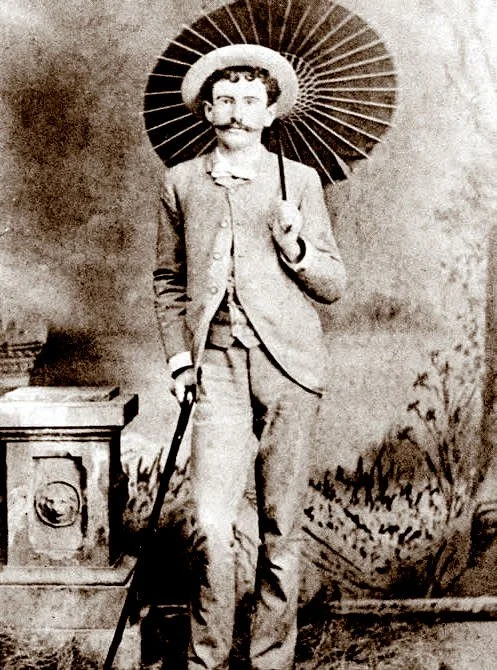
William Sydney Porter as a young man in Austin, Texas

O. Henry (William Sydney Porter) as a young man in Austin, TX

[Fun facts: When O. Henry lived in Austin in the 1880s, he sang in the choir at St. David’s Episcopal Church and was also a member of the "Hill City Quartette", a group that sang at social gatherings. Word on the street is that they were headliners at Maggie Mae’s; the street could be wrong, of course.]

So, after Meredith’s strong title entry for our 2019 concert, we felt a little pressure to create an equally memorable, if somewhat confusing, title this year. I suggested the first part and Jonathan Riemer created the subtitle. And bravo, I say!

Hey! Y’all come! See the details below. We always think of Purcell concerts in a quasi-theatrical manner, with scenes created from disparate parts, and quirkiness, passion, humor, and tragedy created with human experience in mind.

—Danny
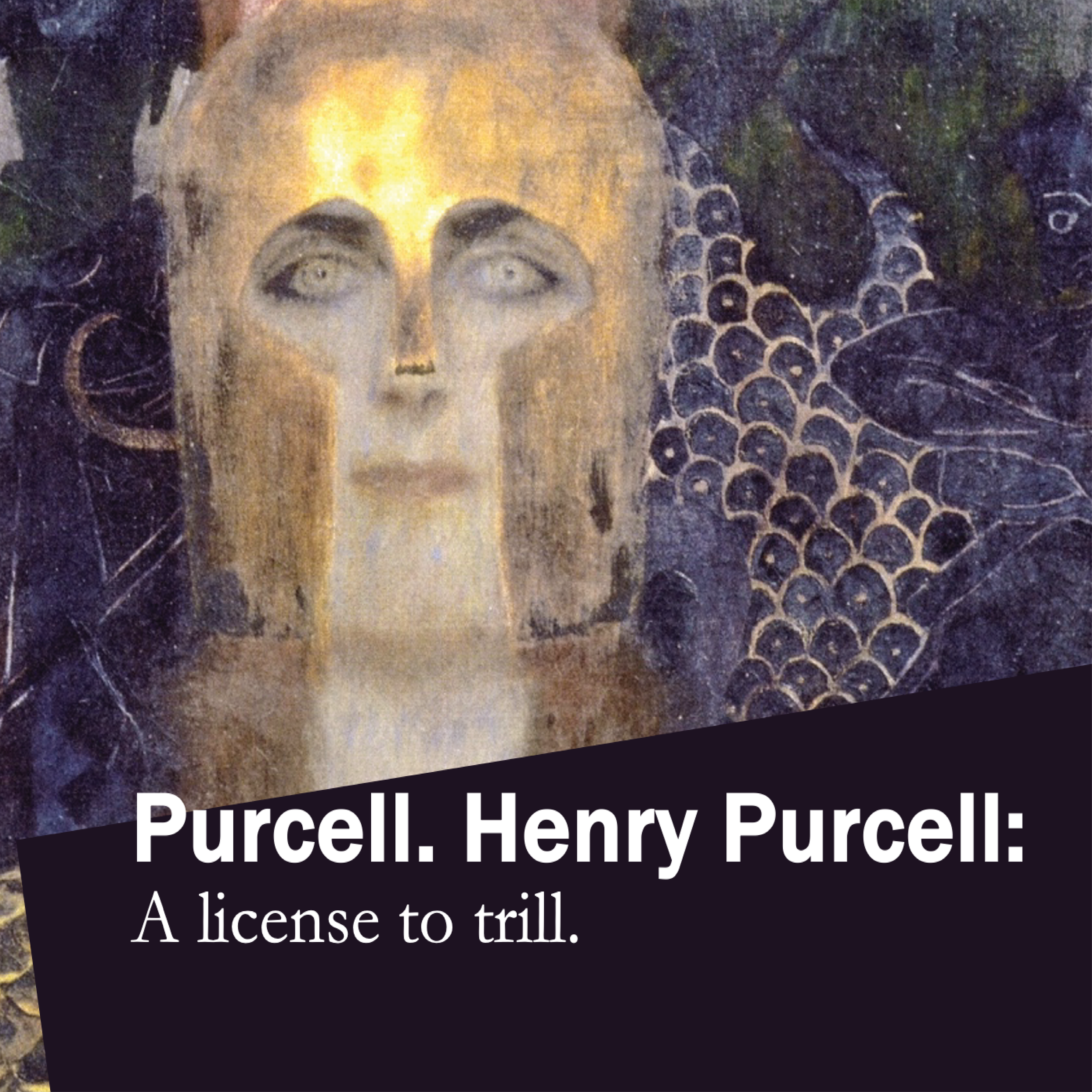


Purcell. Henry PUrcell:
A License to Trill

Saturday, April 18, 2026, at  7:30 pm
&
Sunday, April 19, 2026, at 3:00 pm
Redeemer Presbyterian Church, 2111 Alexander Avenue

Hosted by Arts on Alexander on the campus of Redeemer Presbyterian Church, 
2111 Alexander Ave, Austin, TX 78702.
Visit the Arts on Alexander 2025-2026 events on the AoA website.

Admission (with fees): $53 VIP general; $38 general; $48 VIP seniors (60+);
$33 seniors (60+); $5 students with ID
Tickets available in advance online or by cash, check, or credit card at the door.

For more information, email boxoffice@early-music.org.

Even though the title of our concert is similar to the title of a James Bond movie, the similarity ends there. Sorry for any possible confusion, Bond fans.

 The 17th-century composer Henry Purcell is deservedly known as England’s greatest composer before Edward Elgar and Ralph Vaughan Williams, and he was a strong influence on the styles of Benjamin Britten and contemporary composer Michael Nyman. As organist and composer at Westminster Abbey and also the Chapel Royal, he wrote vast amounts of sacred music, which resounds in modern day churches and concert halls. In his short life, he was an extraordinarily prolific composer with music for the theater, the opera, the court, the sanctuary, and the pub.

His music is used often in movie soundtracks: Have a close listen to the soundtracks of A Clockwork Orange, Kramer vs. Kramer, England, My England, Pride and Prejudice (2005), Moonrise Kingdom, Becoming Jane, and most of the films by Peter Greenaway. Rock groups such as The Who have also used some of Purcell’s ground basses and harmonic patterns.

TEMP has often explored the musical world of this genius, and we now have the opportunity to program a full concert dedicated to Purcell’s eclectic and diverse repertoire.

With gifted soloists, a choir of twenty-four, and eleven instrumentalists, TEMP will present selections from Hail! Bright Cecilia, the semi-operas King Arthur and The Fairy Queen, and more, including pieces suitable for a little rowdiness.

Soloists and featured singers include Jenifer Thyssen, Gitanjali Mathur, Jenny Houghton, Page Stephens, Adrienne Pedrotti Bingamon, Jeffrey Jones-Ragona, David Lopez, Cristian Cantu, Ryland Angel, and others.

 As Purcell himself wrote, “Prithee, be not so sad and serious”:
Come hear our final concert of the season for some sweetness, mystery, and joy!
Back to top

A long, long time

Danny Johnson

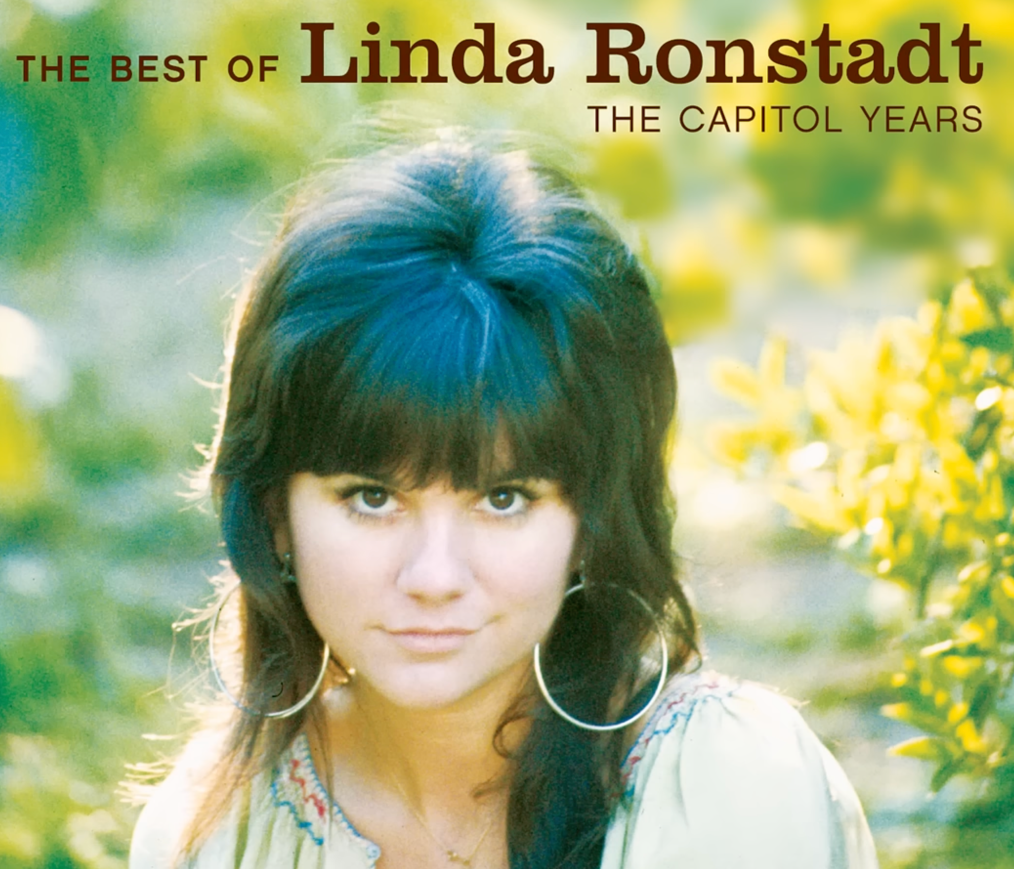
Image of singer-songwriter Linda Rondstadt with the words "The best of Linda Ronstadt: The Capitol Years"

Long, Long Time by Linda Rondstadt: https://www.youtube.com/watch?v=OADhKjNz8mI

I never knew that January was a year unto itself, but the January we just experienced was such an event. It was a long, long time. You know what else has been a long, long time? That’s how long it’s been since we last did a troubadour-centric concert. March of 2013, to be exact.

How are these things related? Welp, did you know that this February that we are currently barely in, has exactly:
• 4 Sundays
• 4 Mondays
• 4 Tuesdays
• 4 Wednesdays
• 4 Thursdays
• 4 Fridays
• 4 Saturdays!

Comtessa de Dia, BnF Fr. 854, f. 141r

This happens only every 823 years, so that means that in 1203 CE, the last time this occurred, just one of the composers in our concert was maybe still alive. That would be the Comtessa de Dia, one of many women poet/composers, who was officially a trobairitz. That was all a long, long time ago. (Ah, speaking of trobairitz: Click on the image of Linda Rondstadt above for a classic example of a modern-day trobairitz song!)

Relatively speaking, our upcoming concert isn’t a long, long time away: about three weeks and some change! Hope you can make it; it might be a long, long time before we can do another troubadour program. But even though this is really the basis for my love of early music, I will abide and take things in stride.

Don’t miss the opportunity to hear this lovely repertoire! See the details below!
-Danny


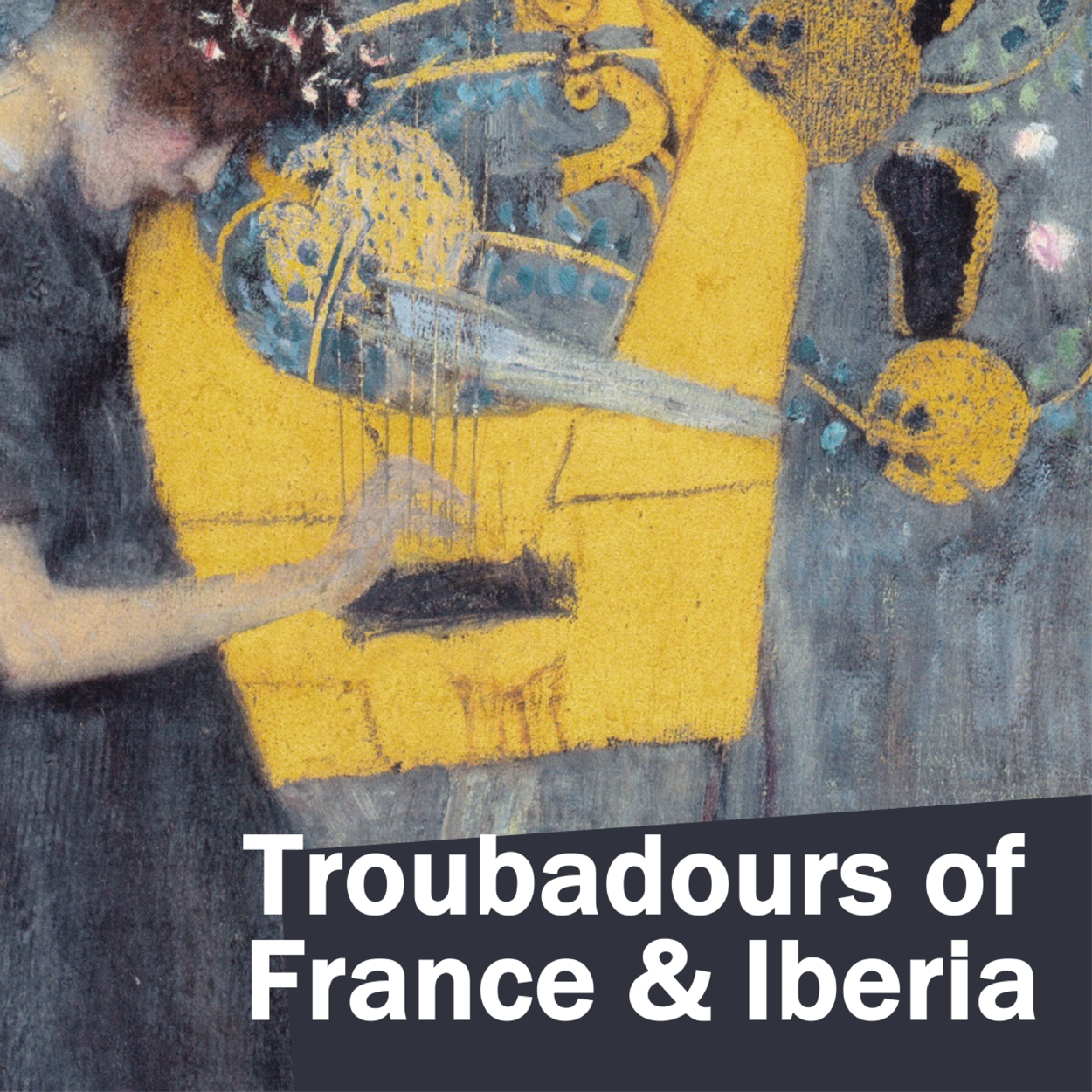
Concert image of Troubadours of France & Iberia with the background image of Klimt's "Music"
 

Troubadours of France & Iberia

Saturday, February 28, 2026, at  7:30 pm
&
Sunday, March 1, 2026, at 3:00 pm

Redeemer Presbyterian Church, 2111 Alexander Avenue

Hosted by Arts on Alexander on the campus of Redeemer Presbyterian Church, 
2111 Alexander Ave, Austin, TX 78702.
Visit the Arts on Alexander 2025-2026 events on the AoA website.

Admission (with fees): $53 VIP general; $38 general; $48 VIP seniors (60+);
$33 seniors (60+); $5 students with ID
Tickets available in advance online or by cash, check, or credit card at the door.

For more information, email boxoffice@early-music.org.

The poetry, music, and culture of the troubadours of what is now southern France informed and inspired musicians and poets all over Europe for generations. Even now, a thousand years later, cultures around the globe refer to favored singer-songwriters and performers as troubadours. The original troubadours wrote of the ideology of love and its rules of conduct and secular morals, the importance of courtesy and honor in relationships, and the highly valued and much-misunderstood ideal of unrequited love. Western poetry itself emerged from the forms, styles, and themes created by the troubadours of Occitania from around 1100 to 1350.

Occitania, which is now the south of France, stretched from Aquitaine on the Atlantic coast to the east through Provence, and south to Catalonia. Occitan was spoken over a huge area, one that was larger than the traditional French-speaking area. For example, it was the first (and preferred) language of Richard Coeur-de-Lion, as well as that of his mother, Eleanor of Aquitaine. Occitan was the first literary language of modern Europe. The sacred music from Aquitaine and northern Iberia is also linked to the artistic force and creativity of the troubadours.

Along with music by a few of the greatest of the trobadors and the Comtessa de Dia (the principal woman troubadour or trobairitz), TEMP will present rarely heard Aquitanian chant from St. Martial de Limoges and motets from northern Iberia and Catalonia, preserved in Las Huelgas Codex, Codex Calixtinus, and Llibre vermell, all of which display the virtuosity and creativity prevalent in the music of the region at that time. We will also present love songs about “the distant beloved” by the 13th-century Galician poet/composer Martin Codax.

We perform this rare and intimate repertoire for you with our company of twelve singers and eight instrumentalists, plus our special guest, percussionist Spiff Wiegand from New York. Our medieval orchestra includes medieval fiddles, rebec, citole, harp, recorder, kantele, psaltery, and oud. The featured vocal soloists include Cayla Cardiff, Page Stephens, Tim O’Brien, and Joel Nesvadba for the trobador and trobairitz songs, with Adrienne Pedrotti Bingamon, Erin Yousef, Jenifer Thyssen, and more providing solos for the Iberian music.

TEMP hasn’t performed a unique troubadour concert like this since 2013;
Don’t miss this opportunity!

Back to top

FEELINGS…whoa whoa whoa…FEELINGS

Danny Johnson

Have you ever had that feeling—well, you know, it’s not really a feeling, it’s a…yeh, an overwhelming desire to not do that thing that you really need to do. It’s the crushing obligation, the fear of failure, the sure exile and…oh wait, no, no exile. That’s a different story. It’s like when you need to buy a Christmas present for someone but there’s an lurking sense that you already gave them that very same present a few years ago (or that they gave it you and you don’t want to regift them ‘their’ present). So you think you should try to find your records to see if you noted which gift went to/came from whom and when, and then you remember that you’ve always thought that might be a pretty good idea but you—a paragon of procrastination—never got around to it.

ANYWAY it’s just like that: The above was just an allegory because I would never ever get mixed up about gifts going to/coming from whom and when. Never ever. But that whole story fits neatly into the initial overwhelming desire to not do that thing that you really need to do.

On the other hand, I really want to tell you about our upcoming concert for the season. Which season, you may ask? I trust that you’ll figure it out when you read our blurb below.

Y’all come!

–Danny

P.S.: Okay, so I did finally do that task I was dreading for so long—and that shirt really does look much nicer when it’s freshly ironed! Lesson learned, at least temporarily.

P.P.S.: I’m looking at this gift card from a huge service station/rest stop chain that has huge stores, and I’m really wondering who gave it to me… If it was you, call me. We need to talk.


Joy and Light:
Delights of the Season

Saturday, December 13, 2025, at  7:30 pm
&
Sunday, December 14, 2025, at 3:00 pm

Redeemer Presbyterian Church, 2111 Alexander Avenue

Hosted by Arts on Alexander on the campus of Redeemer Presbyterian Church, 
2111 Alexander Ave, Austin, TX 78722.
Visit the Arts on Alexander 2024-2025 events on the AoA website.

Admission (with fees): $53 VIP general; $38 general; $48 VIP seniors (60+);
$33 seniors (60+); $5 students with ID
Tickets available in advance online or by cash, check, or credit card at the door.

For more information, email boxoffice@early-music.org.

Join Texas Early Music Project for its annual multilicious feast of holiday music through the ages. Cultures across the centuries have celebrated this festive season with music and we are contributing our share with medieval chant, joyous carols, magnificent motets, rousing Celtic songs, exuberant folk-tunes, and more.

The Christmas music for our annual Joy and Light concert comes from all over Europe, including folk tunes and compositions from Belgium, Germany, France, Spain, and the British Isles that have remained popular through modern times. The British Isles are represented by a variety of popular ballads and folk songs from England, Scotland, and Ireland, all penned by that long-lived composer, Anonymous. France and Spain are similarly represented by anonymous composers, as well as the brilliant Tomás Luis de Victoria. For some of our more unique selections, we have chosen two lively secular Sephardic songs and one Israeli children’s song for Chanukah, and we will present newly composed music based in part on the Ukrainian folk tune that served as the basis for the popular Carol of the Bells.

Many of us know the charming and popular tune Resonet in laudibus by the title Joseph, Lieber Joseph mein, which dates from the 14th century. Both titles were popular with composers in the 16th and 17th centuries and many of the Resonet in laudibus motets were fairly large-scale works with multi-voiced and antiphonal sections. Rather than limit ourselves to the interpretations of one composer, we felt it would be more representative (and a lot more fun) to create our own large-scale work using a different composer from northern Europe for each verse or section. In our version, we use three verses by Michael Praetorius, and one verse each by Polish composer Bartłomiej Pękiel, the Franco-Flemish composer Jacob Regnart, and the German composer Samuel Scheidt.

We always try to feature a few beloved pieces from our holiday repertoire; this year those selections include Drive the Cold Winter Away featuring David Lopez, tenor soloist, with choir and orchestra. Enjoy the audio teaser from our Lullay, Lullay CD below.

Visit our Recordings page to view all of our CDs. They make great holliday gifts!

Jenifer Thyssen, Cayla Cardiff, Joel Nesvadba, Jeffrey Jones-Ragona, Jenny Houghton, Ryland Angel, and Adrienne Pedrotti Bingaman are among the featured soloists, and we are happy to have both acclaimed harpist Therese Honey and kantele virtuoso Viktoria Nizhnik featured in our small orchestra.

Join Texas Early Music Project for a splendid and enriching evening of music.
Encompassing more than 700 years of festive creativity and beauty,
this music is sure to delight your ears and warm your heart.
We coined a new word to describe the concert: multilicious!

Back to top

My Dinner with Antoine

Danny Johnson


Welp, even though good ol’ Ben Franklin said “Guests, like fish, begin to smell after three days,” that wasn’t the case with the visit from my friend Antoine. When he found out that we were featuring movements from the mass he’s recently written in our first concert of the season, he decided to come on over from “Yurp” so we could confab about it before we started rehearsals.

He had never been to AusTex before, so we did a little sightseeing and he just had to go to Antone’s—partly because he thought they had misspelled Antoine’s–and partly because he wanted to hear some blues. He dug it, needless to say, but couldn’t understand why they wouldn’t be interested in having a little sightreading session on stage since he had brought along the manuscript of a new motet that he’s been working on [he carries it everywhere— I’m surprised it fit in the overhead]. He really didn’t understand that members of the general public wouldn’t be able to read the kind of music notation that he’s used to.

Mobile Pumpkin Spice motor oil.

He got over it after we drove around a little bit more. We had to stop for oil when the warning light came on in my car, but luckily we found some seasonal 10W-40. Then he wanted to go to another iconic Austin restaurant, so went to Fonda San Miguel for some of that interior Mexican food he had heard so much about. He dug that, too, and we stayed there for hours discussing musica ficta, modes, motets, and margaritas. The margaritas led him to unload tons of gossip about Josquin and the reasons he really left Italy, and also about his pranksterisms: leaving lots of scores unsigned and/or putting the wrong name on others. Antoine said that Jos joked, “Ha! In 500 years they’re gonna be pulling their hair out trying to figure out which pieces I really wrote!”

Sadly, the visit came to an abrupt end when he was summoned—rather, ordered—to get back to Ferrara asap because Lucrezia Borgia wanted to preview the mass she commissioned for her husband, the Duke. (It’s the same mass we are performing in a few weeks, and even though we didn’t really get a chance to confab on it, duty called in no uncertain tone of voice. So to speak.)

On the way to the airport, he was thrilled to see a local coffee place, hoping against hope that they would have his favorite coffee to sustain him for that long flight. He took a selfie with the only pumpkin spice latte he’s likely to have this season, unless he comes back for another visit! Oh, there’s info below about that concert I’ve been mentioning. That mass is really quiiite special; I’m sure Duke Alfonso I will get all shaken up over it! See the details below, including audio excerpts.

-Danny


A Cry of many voices:
British Isles & The Lowlands

Saturday, September 20, 2025, at  7:30 pm
&
Sunday, September 21, 2025, at 3:00 pm

St. Martin’s Lutheran Church, 606 W. 15th Street

Admission (with fees): $53 VIP general; $38 general; $48 VIP seniors (60+);
$33 seniors (60+); $5 students with ID
Tickets available in advance online or by cash, check, or credit card at the door.

For more information, email boxoffice@early-music.org.

Welcome to our 2025–2026 Love Letters concert season in which we will explore the timeless love of agape, the joy and pain of eros, and a dash of philia and storge. In our opening concert, we explore these themes in the music of the British Isles and the Lowlands (or Low Countries, corresponding to modern-day Belgium, The Netherlands, and parts of northern France), particularly during the transition from the late Medieval style to that of the early Renaissance.

The cry of many voices, 26 a cappella voices in this case, will sing both as individuals and as members of a unit while performing some of the most sublime, moving, and exhilarating music imaginable: The ultimate effect is greater than the sum of its parts. There is magic in the interweaving voices, in the hypnotically static harmonic rhythms alternating with florid vocal lines full of both subtle and obvious virtuosity, and in the architecture of starkly transparent solo lines alternating with thickly colorful choral sections. This is the world of the Eton Choirbook in England and the Scottish composer Robert Carver, who was greatly influenced by the Eton Choirbook. It is also the world of the Franco-Flemish composer Antoine Brumel, whose powerful Earthquake Mass developed uniquely on the continent. In order to further the experience of “many voices,” the featured piece from the Eton Choirbook by Robert Wylkynson is for 9 voice parts and the movements from Brumel’s Mass are for 12 parts. But wait—there’s more! Robert Carver’s O bone Jesu is for 19 parts! All three composers build magnificent pillars of sound using different compositional techniques.

As a contrast with these relatively massive vocal works, our consort of viols will offer more transparent timbres with pieces by English composers Robert Fayrfax, John Dunstable, and Hugh Aston, and continental (Lowlands) masters Josquin des Prez as well as Alexander Agricola and Antoine Brumel.

Enjoy these audio teasers from our CD Sacred: Music of the Divine from Medieval to Baroque:

Join us for a beautiful and moving concert that will illuminate the passage from the late Medieval to the early Renaissance with passion and beauty.

Back to top

April: Good or Not? Discuss

Danny Johnson

We are approaching the end of April, which is either the ‘cruelest month’ (T. S. Eliot) or which is ‘in my mistress' face’ (Thomas Morley) or which makes us want to travel, according to Robert Browning: “Oh to be in England now that April’s there.” (I was thinking more along the lines of Belgium…) At any rate, it’s good news because the Central Texas summer isn’t here yet, but it’s bad news because the Central Texas summer could very well arrive tomorrow and last until October. Ugh. Let’s change the subject, eh?

In 2018, Maestro Daniel Johnson explained ensaladas, pieces that are also featured on our upcoming Alegría: The Spanish Renaissance program. See more videos on our Gallery page!

Rather than think about such things as weather’n’stuff that are out of our control (and that includes a lot of stuff!) let’s think about a nice salad, or ensalada, if you will. In our upcoming Alegría concert we will be performing a few ensaladas, which are unique pieces from Renaissance Spain composed by Mateo Flecha. These are little epics, illustrated with music in many different styles to fit the rapidly shifting texts; so it’s a little of this and little of that: a salad, prepared brilliantly by Señor Flecha. The most epic of these is La Justa (The Joust), a battle between good and evil, the light and the dark. Think of Dumbledore/Gandalf/Obi-Wan Kenobi on one side and several adversaries Who Shall Not Be Named on the other side.

Yet, there is much Alegría (joy) throughout! See the details below, including audio excerpts. Enjoy April while we have it!
—Danny


Alegría: The Spanish Renaissance

Saturday, May 17, 2025, at  7:30 pm
&
Sunday, May 18, 2025, at 3:00 pm
Redeemer Presbyterian Church, 2111 Alexander Avenue

Hosted by Arts on Alexander on the campus of Redeemer Presbyterian Church, 
2111 Alexander Ave, Austin, TX 78722.
Visit the Arts on Alexander 2024-2025 events on the AoA website.

Admission $35 general; $30 seniors (60+); $5 students with ID
Tickets available in advance online or by cash, check, or credit card at the door.

For more information, email boxoffice@early-music.org.

Seriously? There are ensaladas on this concert?!?
Usually, if you want an ensalada, you go to a restaurant, not a concert, right?

Not so fast, my friend; these ensaladas are a treat for the ears and the spirit, but have nothing to do with the delectable edible! Like most salads, they are created from a little of this and little of that, but that’s where the similarity ends. Filled with drama, Biblical quotations, exhortations, lovely melodies, and lots of humor, the ensaladas are toe-tappers from beginning to end! They were extraordinarily popular in many of the Cathedrals of Renaissance Spain—and were even banned in a few!

For a less raucous and solemn contrast, our program will explore some of the glorious wealth of polyphonic sacred music from the cathedrals and monasteries of 16th-century Spain, a repertoire that has served as inspiration for fans of choral music everywhere, with selections by Cristóbal de Morales and Francisco Guerrero. The Agnus Dei from the Missa Mille Regretz, by Morales, is not only a beautiful way with which to end a mass, but it is also a fitting homage to Josquin des Prez, the famous composer who composed one of the most unique chansons in the Renaissance, Mille Regretz. To be fair, there are questions about who really composed the chanson, but there’s no doubt about its hauntingly beautiful effect.

Other pieces in the concert feature the viol consort, led by our guest artist, viola da gamba star Mary Springfels, guest percussionist Peter Maund, and 3 sackbut (early trombone) players, led by University of Texas trombone faculty Nathaniel Brickens.

Soloists and featured singers include Jenifer Thyssen, Gitanjali Mathur, Jenny Houghton, Cayla Cardiff, Jeffrey Jones-Ragona, David Lopez, Tim O’Brien, Ryland Angel, and many more.

Enjoy these audio teasers from our 2015 and 2018 performances:

¡Bailamos!

Back to top

Taco Tuesday #116: Dutch Stroop-Tacos

Danny Johnson

Well, yes, we’re late, but last Tuesday was April Fool’s and we didn’t want to disrupt your day of tricky surrealism with straightforward loveliness! Now that we can proceed, let’s go to Belgium and the Netherlands. All the cool kids are! Yes, I’m looking at you, you!  

Outside the Amsterdam train station and in other parts of town (and all over the Netherlands), street vendors sell stroopwafels, a popular treat ever since the 18th century. They are as popular as, oh, I don’t know, let’s say… tacos!! So here we go with Dutch Sweet Tacos! Sweet Dutch Tacos? Dessert Tacos? 

In honor of this week’s theme, and in honor of a couple of memorable trips with EurailPass in hand, we visit the Lowlands. These days we would call this area the Netherlands, Belgium, and northern France: The demarcations were somewhat more fluid in the 16th and 17th centuries. The relatively tiny area of the Lowlands produced an inordinate number of skilled and creative composers and artists who influenced the fine arts in the rest of Europe for generations. 

Dutch Treat: The Golden Age in the Netherlands

April 2 & 3, 2016

We start with two versions of a beloved melody: Mijn hert altyt heeft verlanghen. From what is now northern Belgium, Pierre de la Rue likely had professional associations with Josquin des Prez from an early age. (He is the “Pierchon” mentioned in Josquin’s memorial to Ockeghem, Nymphes des bois.) As a member of the Grande chapelle of the Burgundian-Habsburg court, he traveled extensively as a singer and a composer, and was another of the highly important and influential Franco-Flemish composers of Josquin’s generation.

Mijn hert altyt heeft verlanghen (Pierre de la Rue, c.1460-1518)
Singers

My heart always has desire for you,
My most beloved.
My love for you has captured me,
All yours I want to be.

Before all the common world
No one who hears or sees it can be in any doubt:
You alone has my heart.

Therefore, fair love, do not let me down.

Mijn herteken heeft altyts verlanghen (Benedictus Ducis, a.k.a. Benedictus Hertoghs, c.1492-1544)
Jenifer Thyssen, soloist, with Viol Concert

We follow with another version of the song, this time with instruments and a solo voice, by another composer from Antwerp, Benedictus Ducis.

My heart longs for you
Unceasingly,
my beloved;
You have my heart in thrall:

Let me be your vassal.

It is common knowledge—

No one who hears or sees it can be in any doubt:
That my heart is yours alone:

Therefore, I beg you, forget me not.


Wij comen hier gelopen (Anonymous; Duytsch musyck boeck, Petrus Phalesius, 1572; Antwerp)
Viol Consort

The anonymous piece that follows, Wij comen hier gelopen, is in the same rustic vein as the next piece; though they both sound a little bit like country songs, they both have some nifty imitation and offbeat sections that accentuate the skill of their composers


Bransle Dit le Bourguignon (Anonymous; Harmonice Musices Odhecaton; Venecia, 1501)
Instruments


The bransle Dit le Bourguignon(“Called the Burgundian”) was an anonymous dance that was popular enough to be included in the Harmonice Musices Odhecaton, published in Venice. Thst was a really big deal!


Nu dobbert mijn Liefje op de Ree (Constantijn Huygens, 1596-1687; poem G.A. Bredero, 1585-1618) 
arr. D Johnson, 2016
Cayla Cardiff, soloist
With Meredith Ruduski & Stephanie Prewitt

Rarely do we know the names of both the poet and composer of works during this time period, but it is true of our final song of this Taco. Gerbrand Adriaenszoon Bredero was an Amsterdam-born poet and playwright in the Dutch Golden Age. Constantijn Huygens was born in The Hague and was famous as both a poet and composer. The picturesque poetry with its constant references to Greek mythology calls for variation in the accompanying instruments.

Now my Love is floating on the ship, on the restless, rising waves,
On the grand and spacious sea that he, alas! must now go sail.
Sail away, as winds prevail, always think, where e’er you be, on she who loves you.

Oh, had I two eyes like the Sun, that I could survey the whole world,
Or if I could, dear one, follow thee, I would be by thee constantly.
But if it can’t be bodily—For honor doth forbid me that—My soul shall never love deny.

And though I lack Daedalus’s art, who could carry his love through the air,
I’ll guide you with my truest love, my favor and my pleasure merry.
Were I but free from fleshly bonds, my spirit then would go with you
Where now my thoughts do wander.

If I had Medea’s witchcraft, I would be Aeolus on his peaks:
I would put a spell on him that not one little wind would escape him.
There would burst a strong gust from his sack; I would send it into the sails to tighten them,
I would do it with ease.

The wind, the water, and the tide, twinkling stars in their fixed poles:
There became my highest good, my life, my light, my counselor;
O good-hearted God, most famous, O ruler of heaven and earth,
Guard my dear Ceyx.

Alcyone your sweet bride weeps; the heart wants to tear her from sadness.
Because it thunders, storms, and blows your little turtle-dove knows only sorrow.
O Ceyx! O Ceyx! Worthy man!
What heart-pain happens to your little wife, who cannot be away from you.

Now my Love is floating on the ship, on the restless, rising waves,
On the grand and spacious sea that he, alas! must now go sail.
Sail away, as winds prevail, always think, where e’er you be, on she who loves you.


I would really like a stroopwafel about now; maybe I’ll just have a taco! The edible kind, I mean. 

Hey what are you up to on Saturday, April 26 at 7:30pm? You might recall that we had an event last year called “TEMP on Tap” where we took early music to the streets and featured a few select TEMP singers and instrumentalists at a local pub for some bawdy songs, drinking songs, and singalongs! It was such a good time, we decided to bring it back! It's gonna be a grand ol' time, rated R, and it’s free to attend with a suggested donation of $20. See HERE for more details!

Thanks for your support, again!  We will be back in approximately exactly two weeks with a brand-spankin’ new Taco for you!  As always, stay safe, stay sane! We’re trying to help.  

Adrienne has some big news for you! See below! 

Danny

Back to top

Taco Tuesday #115: Sephardic Tacos

Danny Johnson

Well, yes, we’re late, but only a little bit; besides, last week was Amplify and we thought we should leave you be on Tuesday in order to rest up for Wednesday! And wow, did you ever come through! Thank you! 

So I thought we should listen to something completely different for this edition of Musical Tacos! These pieces were plucked from concerts between 2009-2012! 

The Exiled: Songs of the Sephardim

February 7, 2009
and

Siren Song: Sephardic Songs of Fantasy and Love

May 6 & 7, 2011
and

Noches, Noches: Sephardic Songs of Love & Life

October 20 & 21, 2012

Sephardic music bears many of the aspects of ‘world music’, ‘folk music’, and maybe even art song and pop. Though our interpretations tend to be strongly Westernized, we do make use of Arabic rhythmic and melodic modes. Since the provenance of Sephardic music stretches some 600 years, it is not strictly ‘early music’, but it is music that we, an early music group, love to research, arrange, and perform.

(Arrangements and polyphony by D Johnson except as noted)

La serena (Salónica & Egypt) 
Stephanie Prewitt, soloist

This is one of the most popular Sephardic songs with many musical and poetic variants, most of which contain both surrealistic and erotic verses.

At the sea is a tower,
In the tower is a window,
There sits a girl
Who sings to the sailors.

If the sea were made of milk,
And the boats made of cinnamon,
I would stain myself completely
To save my banner.

If the sea were made of milk,
I would become a fisherman,
I would fish for my sorrows
With little words of love.

Give me your hand, my dove,
To bring me up to your nest.
It is a curse to sleep alone,
I come to sleep with you.


Una matica de ruda (Turkey) – 
Larisa Montanaro, soloist

Una matica de ruda (Bosnia) – 
Gitanjali Mathur, soloist

Another of the oldest and most popular texts is Una matica de ruda, the Sephardic version of the early Renaissance Spanish ballad La guirinalda de las rosas, and it survives today as a popular wedding song with a wide diversity of tunes. No matter which century adopts the song, the theme remains the same: the rue twig will deflect the evil eye and will therefore bring luck to the newlyweds. We present two versions, one dating from several centuries ago and a second one from 19th or 20th century Bosnia.

 “A sprig of rue, a flowering sprig;
A young man gave it to me,
One who is in love with me.”

“My dear daughter,
Do not throw yourself into ruin;
There is more value to a bad husband
Than to a new love.”

“A bad husband, my mother:
There is no greater curse;
A new love, my mother,
Is like the apple and the lime.”


La prima vez (Turkey, Balkans)
Daniel Johnson, soloist

The first time I saw you
I fell in love with your eyes.
From that moment I loved you:
I will love you to the grave.

Come close, my beloved,
Salvation of my life,
Speak to me and reveal
The secrets of your life.


Rahelica baila 
Instrumental

Rahelica baila is based on a simple children’s song and we have added some polyphony and improvisations to add to the fun!


There! We hope you liked that – there will be more!! 

Thanks for your support, again! We will be back in approximately exactly two weeks with a brand-spankin’ new Taco for you! 

As always, stay safe, stay sane! We’re trying to help.  

Danny

Back to top

Taco Tuesday #114: My Love is Like a Crispy, Crunchy Taco

Danny Johnson

Hi, y’all! It’s been two weeks–it’s time for some Musical Tacos! 
Or, as Robert Burns might have said if he spoke Scots Gaelic, “Tha an t-àm ann airson Tacos Ciùil!”

Yes, our Celtic concert is coming up soon, so here’s a little preview for our most recent Celtic concert, in 2022. You can absorb all of these and not spoil your appetite: None of these will be performed at this year’s concert!  As before, my primary sources for these evocative, romantic, and sometimes scandalous ballads have remained constant over the last thirty years. Orpheus Caledonius: Or, A Collection of Scots Songs set to musick by W. Thomson is a collection of 100 songs published by William Thomson in London in 1725 and 1733. Thomson grew up in Edinburgh and as the son of a professional musician, he was surrounded by characteristic Scots songs. His nostalgia for the songs of his youth compelled him to collect and publish some of the more fashionable and popular ones. The Scots Musical Museum, originally intended as a collection of all the existing Scots songs, contains 600 ballads in six volumes published between 1787 and 1803 by James Johnson (c. 1750–1811) with no small assistance from Robert Burns (1759–1796). Most of the poems are anonymous, but Burns contributed more than 150 poems and curated or edited many others.

Celtic Crossings

February 12 & 13, 2022

The Banks of the Devon 🙞 Poem by Robert Burns (1759–1796); Tune: T’hannerach dhon na chri; 
The Scots Musical Museum II: 157, 1788; arr. D. Johnson 1999, 2021
Jenifer Thyssen, soloist

According to the poet, “These verses, were composed on a charming girl, a Miss Charlotte Hamilton, who is now married to James M’Kitrick Adair, Esq., physician. She is sister to my worthy friend Gavin Hamilton, of Mauchline, and was born on the banks of Ayr…she was at the time I wrote the lines, residing at Herveyston, in Clackmannanshire, on the romantic banks of the little river Devon. I first heard the air from a lady in Inverness and got the notes taken down for this work.” [The Book of Scottish Song, ed. Alexander Whitelaw, p. 209.]

How pleasant the banks of the clear-winding Devon,
⁠With green-spreading bushes, and flowers blooming fair!
But the bonniest flower on the banks of the Devon
⁠Was once a sweet bud on the braes of the Ayr.
Mild be the sun on this sweet blushing flower,
⁠In the gay rosy morn, as it bathes in the dew;
And gentle the fall of the soft vernal shower,
⁠That steals on the evening each leaf to renew!

O spare the dear blossom, ye orient breezes,
⁠With chill hoary wing as ye usher the dawn!
And far be thou distant, thou reptile, that seizes
⁠The verdure and pride of the garden and lawn!
Let Bourbon exult in her gay gilded lilies,
⁠And England triumphant display her proud rose;
A fairer than either adorns the green valleys
Where Devon, sweet Devon, meandering flows.


Mary Scott, Queen of Yarrow 🙞 Caledonian Pocket Companion, James Oswald, 1745; arr. T. Honey
Therese Honey, harp

Mary Scott, Queen of Yarrow appears in several 18th-century sources; the vocal version in The Scots Musical Museum is quite similar to the version Therese Honey will play from James Oswald’s Caledonian Pocket Companion.


Wae is my heart 🙞 Poem attrib. to Robert Burns; Scots Musical Museum V: 476, 1796; 
arr. D. Johnson, 1996, 2022
Cayla Cardiff, soloist

The tune to this piece is thought to be a combination of the two older melodies, Will ye go to Flanders and Gala Water. The lyrics to this piece are now attributed to Burns, but there is still a question mark over his involvement. The extent of Burns’s involvement in fragmentary songs which he recovered is often unknown. The poetry of this song, however, is universally acknowledged as beautiful.

Wae is my heart, and the tear’s in my e’e;
Lang, lang joy’s been a stranger to me:
Forsaken and friendless my burden I bear,
And the sweet voice o’ pity ne’er sounds in my ear.

Love, thou hast pleasures, and deep hae I loved;
Love thou hast sorrows, and sair hae I proved:
But this bruised heart that now bleeds in my breast,
I can feel by its throbbings will soon be at rest.


I wish you would marry me now 🙞 A Collection of Scots Reels or Country Dances, Robert Bremner, 1757;
arr. D Johnson, 2019, 2022
Instrumental


This lively reel (also known as George Carnegie’s Strathspey, Inverara Rant, Marry Me Now, The Proposal) was first printed in Robert Bremner’s 1757 anthology. Its popularity is confirmed by other early printings, including the (James) Gillespie Manuscript of Perth (1768).


Frennett Hall 🙞 Anonymous poem and music; The Scots Musical Museum III: 286, 1790; 
arr. D. Johnson, 2019, 2022
Ryland Angel, Cayla Cardiff, & Joel Nesvadba, soloists

We have now arrived at the Game of Thrones portion of the Taco! Although this song is based on an historical event in 1630, it is undoubtedly romanticized a bit. Lady Frendraught (Elizabeth, a daughter of the 12th Earl of Sutherland) entices two young travelers to ease their journey by staying the night at Castle Frendraught (aka Frennet) of the Crichton family despite a feud between their two families. The travelers, Lord John of Huntly and Gordon of Rothiemay, consent based on Lady Frennet’s promises. Their room is set afire by night, with no survivors. It was never established that this was more than a ghastly accident, but the Gordons and Huntlys were passionately resentful. They took the quarrel to the Privy Council. According to Rosalind Mitchison’s A History of Scotland (1982), the Council “investigated repeatedly, tortured a servant or two for information, executed a hanger-on of no great social status, but failed to gain evidence against Crichton of Frendraught. Dissatisfied, a member of the Huntley clan let in broken men from the Highlands to ravage Crichton land, and for years the northeast was troubled by burnings, looting, and kidnappings.” In terms of feud, this wasn’t notably worse than much of what passed in Scotland; disappointingly enough, there were no dragons involved. The unknown melody, with elements of modal folk music, seems to be from a much earlier time than its 1790 publication.

When Frennet castle’s ivied wa’s thro’ yallow leaves were seen;
When birds forsook the sapless boughs, and bees the faded green;
Then Lady Frennet, vengeful Dame, did wander frae the ha’,
To the wild forest’s dewie gloom, among the leaves that fa’.

Her page, the swiftest of her train, had clumb a lofty tree,
Whase branches to the angry blast were soughing mournfullie: (soughing: sighing)
He turn’d his een towards the path that near the castle lay,
Where good Lord John and Rothemay were riding down the brae.

Swift darts the Eagle from the sky, when prey beneath is seen;
As quickly he forgot his hold and perch’d upon the green:
“O hie thee, hie thee! Lady gay, frae this dark wood awa’:
Some visitors of gallant mien are hasting to the ha’.”

Then round she row’d her silken plaid, her feet she did not spare,
Until she left the forest skirts alang bowshot and mair.
“O where, o where, my good Lord John, O tell me where you ride?
Within my castle wall this night I hope you mean to bide.

Kind nobles, will ye but alight, in yonder bow’r to stay?
Saft ease shall teach you to forget the harness of the way.”
“Forbear entreaty, gentle dame, how can we here remain?
Full well you ken your Husband dear was by our Father slain. (ken: know)

The thoughts of which with fell revenge your angry bosom swell:
Enrag’d, you’ve sworn that blood for blood should this black passion quell.”
“O fear not, fear not, good Lord John, that I will you betray,
Or sue requittal for a debt which Nature cannot pay.”

Bear witness, a’ ye pow’rs on high, ye lights that ’gin to shine,
This night shall prove the sacred cord that knits your faith and mine.
The Lady slee, with honey’d words, entic’d thir youths to stay: (slee: sly; thir: those)
But morning sun nere shone upon Lord John nor Rothemay.


Ok! I hope your appetite has been whetted (?) for more! We’re so excited to share more Celtic music (and more Robert Burns poetry) with you at our Celtic Memories concert on February 22-23! Tickets are available now! Check out our Director’s Blog for more details.

We will be back in approximately exactly two weeks with a brand-spankin’ new Taco for you! As always, stay safe, stay sane! We’re trying to help.  

Danny

Back to top

Taco Tuesday #113: Taco-mus Maximus

Danny Johnson

Hi, y’all! It’s been two weeks–it’s time for some Musical Tacos! 

Or, as Maximilian I might have said, “Es ist Zeit für Musikalische Tacos!”

Yes, we’re returning to last week’s concert from 2022. In case you missed the last Taco, here’s a short version of the back-story: “Maximilian I (1459-1519) is the primary subject. Learning about Max was enlightening, to say the least: He was King of the Romans from 1486 and Holy Roman Emperor from 1508 until his death, during a time of constantly shifting allegiances and with many enemies. Max is also known as an essentially modern, innovative ruler who carried out important reforms and promoted significant cultural achievements. He had notable influence on the development of the musical tradition in Austria and Germany; several historians credit Maximilian with playing the decisive role in making Vienna the music capital of Europe. He initiated the Habsburg tradition of supporting large-scale choirs, which he staffed with brilliant musicians like Paul Hofhaimer, Heinrich Isaac, and Ludwig Senfl. At least for our musical concerns, we can presume to say that there is much to praise about the Emperor.”

But he had kids who followed his traditions even while he was alive: Maximilian, the power of the Habsburgs in most of Europe by marrying Mary of Burgundy in 1477. They had two children who survived beyond infancy: Philip I of Castile (1478–1506), also known as Philip the Handsome, and Margaret of Austria (1480–1530). Philip was ruler of the Burgundian Netherlands and was the titular Duke of Burgundy from 1482 to 1506, as well as the first Habsburg King of Castile (as Philip I) for a brief time. Margaret was Governor of the Habsburg Netherlands from 1507 to 1515 and again from 1519 to 1530. Both of them were supporters of the arts, especially music.

Philip’s Burgundian chapel had some of the most distinguished musicians in Europe, including Pierre de la Rue, Alexander Agricola, and Josquin des Prez. Margaret made her home in Mechelen, halfway between Brussels and Antwerp. She was arguably the most accomplished musician of the Habsburg family as a singer, a fine keyboard player, and possibly a composer. Margaret possessed a rich library consisting mostly of missals, poetry, historical, and ethical treatises, which included the works of Christine de Pizan and the famous illuminated Très Riches Heures du duc de Berry. She possessed several chansonniers, songbooks, which contained works by Josquin des Prez, Johannes Ockeghem, Jacob Obrecht, and Pierre de la Rue, who was her favorite composer.

And now to some music.

When Max was Emperor:
Musical Splendor for the Holy Roman Court

October 8 & 9, 2022

Mater patris et filia 🙞 Antoine Brumel (c. 1460–c. 1512–13?); A. Brumel: Collected Works, ed. B. Hudson,
Corpus mensurabilis musicae, Neuhausen nr. Stuttgart: American Institute of Musicology, vol. 5, pp. 63–64, 1969–72
Singers

Antoine Brumel was the most famous of the French-born composers of the Franco-Flemish school. He was one of the most celebrated singers of his day, with “a new style of singing: sweet, pleasant, devout, and beautiful” (Éloy d’Amerval, Le Livre de la deablerie, 1508). After working for Margaret’s husband (Philibert II, Duke of Savoy), Brumel was master of the choristers at Notre Dame from 1498–1501. This three-voice motet alternates close imitation polyphony with completely chordal sections to great effect and it was the basis for Josquin’s Missa Mater patris et filia. One of the more unique aspects of Brumel’s style is his repetitive technique, which can be heard in the “Maria, propter filiam…”

Mother of your father, and daughter,
Source of joy of women,
Wondrous star of the sea, hear our sighing.
Queen of the court of the heavenly vault,
Mother of mercy, in this valley of distress,
Mary, by means of your Son, bring us healing.
Good Jesus, Son of God, hear our prayers,
And by our prayers grant us healing. Amen.


Tous les regretz 🙞 Antoine Brumel; Brussels, Album de Marguerite d’Austriche, Bibliothèque royale de Belgique,
B-BR MS 228, ff. 3v.–4r, 1515–1523
Cayla Cardiff, Ryland Angel, David Lopez, & Morgan Kramer

Tous les regretz is an extremely intimate homophonic chanson by Brumel for four voices. It demonstrates his repetition technique, one of the more unique aspects of his style. 

All the sadness that has ever been of this world,
Come to me, wherever I may be.
Take my heart in its deep grief
And cleave it so that my lady may see.


Tous les regretz 🙞 Pierre de la Rue (c. 1452–1518; poem by Henri Baude (1415-1490);
Harmonice Musices Odhecaton, vol. 2, no. 35, p. 26, 1502; Album de Marguerite d’Austriche
Brussels, Bibliothèque royale de Belgique, B-BR MS 228, ff. 3v.–4r, 1515–1523
Jenifer Thyssen & Ryland Angel, soloists
Mary Springfels & John Walters, bass violas da gamba

Pierre de la Rue, also known by his Flemish name Peter vander Straten and a multitude of other nicknames, was born in the early 1450s in Tournai, in the Hainault province of modern Belgium. He was the least peripatetic of our four composers and the only one who didn’t work in Italy. From 1492, he was a full member of the Confraternity of the Illustre Lieve Vrouwe in ’s-Hertogenbosch and he was a member of the musical establishment of the Grande chapelle of the Burgundian-Habsburg court of Holy Roman Emperor Maximilian. Did we mention that he was Margaret’s favorite composer? La Rue’s version of Tous les regretz, which does have a slightly different text from the one that Brumel set, is constructed similarly, employing imitation and mode shifting.

All remorses that torment the hearts,
Come to mine and settle in it
To shorten the rest of my life;
For I lost her, who was filled
With good habits and perfect qualities.


Circumdederunt me gemitus mortis 🙞 Heinrich Isaac; Polyphonic Introit for Septuagesima Sunday
 München: Bayerische Staatsbibliothek, D-Mbs Mus. MS 39, ff. 89v–92r, c. 1510
Singers

Heinrich Isaac was in Konstanz in 1508 for the Reichstag there and part of his duties included providing music for the Imperial court chapel choir. While he was there, he received a commission from the Cathedral in Konstanz to set many of the Propers of the mass unique to the local liturgy. The result was the creation of the Choralis Constantinus, a huge anthology of over 450 chant-based polyphonic motets for the Proper of the Mass. After the deaths of both Maximilian and Isaac, Senfl, who had been Isaac’s pupil as a member of the Imperial court choir, gathered all the Isaac settings of the Proper and placed them into liturgical order for the church year. The motets remain some of the finest examples of chant-based Renaissance polyphony in existence. It was published in Nürnberg in three volumes in 1550–1555, more than thirty years after Isaac’s death. Among them is Circumdederunt me gemitus mortis, the Polyphonic Introit for Septuagesima Sunday: the ninth Sunday before Easter, the third before Ash Wednesday.

Introit:
The sorrows of death have assailed me,
The pains of hell have encompassed me:
And I called upon the Lord in my distress,
And from his holy temple he heard my voice.


We will return soon to this concert, but in the next couple of Tacos we’ll prepare you for the upcoming Celtic concert on Feb. 22-23 (have you gotten your TICKETS yet?). The blog for that much loved concert (well, we love it!) is coming up at the end of the week. Check out our Director’s Blog here soon!

We are also less than a week away from our Midwinter Madrigal Sing! Let madrigals warm your wintery heart on Monday, Feb. 3 with special guest conductor Trevor Shaw from Inversion Ensemble sharing the podium with me. Come sing madrigals with other early music buffs. No experience required! More details HERE!

Stay safe, stay sane! We’re trying to help. 

Danny

Back to top

Happy Birthday Robert Burns!

Danny Johnson

…A Month Belated

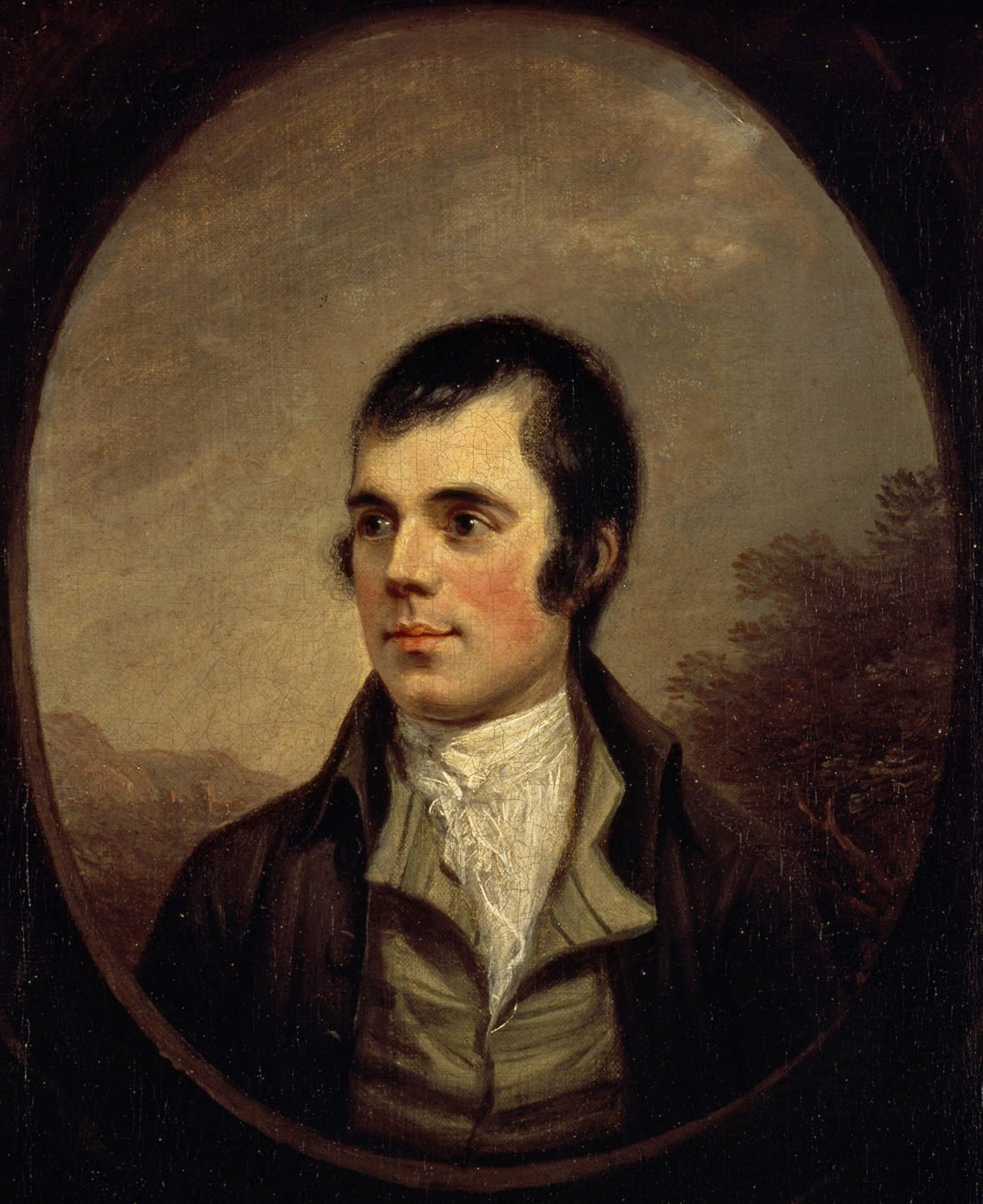
Portrait of Burns by Alexander Nasmyth, 1787, Scottish National Portrait Gallery.

Portrait of Robert Burns by  Alexander Nasmyth, 1787, Scottish National Portrait Gallery.

I mean…we could have had our Celtic concert during his actual birthday week, but I’m afraid that would have interfered with the famous and fabulous Burns Night celebrations that some of you have, and that just wouldn’t do. We decided that giving you almost a whole month to recover from your haggis and Scotch whisky was the considerate and compassionate thing to do so that you could enjoy our concerts better without that pounding ache in the space between your ears. [Extra points: What movie is that phrase from? Hint: It has nothing to do with Scottish Ballads or Irish dances. That I recall, at least.]

At any rate, Burns contributed a lot of poems to this concert, either in whole or by doing some minor (sometimes major) editing of pre-existing poems. Speaking of Scottish poems, do you know the correct pronunciation of the word ‘poem’ in Scotland? It’s a keeper!

Speaking of keepers, TEMP’s Celtic concerts date back to my UT EME days and we’ve been doing a couple of these Scottish ballads since then. But you can read more about TEMP’s history with the ballads in the concert blurb below. I need to go find some pain relievers because I’ve got an empathy headache just thinking about you folks recovering from Burns Night.

See you at the concert, I hope!
—Danny


Celtic Memories

Saturday, February 22, 2025, at  7:30 pm
&
Sunday, February 23, 2025, at 3:00 pm
Redeemer Presbyterian Church, 2111 Alexander Avenue

Hosted by Arts on Alexander on the campus of Redeemer Presbyterian Church, 
2111 Alexander Ave, Austin, TX 78722.
Visit the Arts on Alexander 2024-2025 events on the AoA website.

Admission $35 general; $30 seniors (60+); $5 students with ID
Tickets available in advance online or by cash, check, or credit card at the door.

For more information, email boxoffice@early-music.org.

Scottish ballads from the 18th century have been a part of TEMP’s core repertoire for decades. With roots dating back to performances with the UT Early Music Ensemble in the mid-90s, TEMP presented Celtic concerts focused mostly on Scottish ballads in 2007, 2008, 2013, 2019, and 2022 and they were the subject of our only ‘studio’ recording, The Bonny Broom and Other Scottish Ballads, from 1999.

With musical sources dating from the 16th–18th centuries featuring poems by Robert Burns and a few other poets, both known and unknown, the concert will give wonderful insight into the culture that created this very popular and accessible music. Even the English held Scottish ballads in high esteem and our own Benjamin Franklin adored these songs and considered them the height of great art. Scottish ballads are renowned for their evocative, heartfelt, and humorous aspects, but also for their beautiful and expressive melodies.

Some of the songs provide a glimpse into historical or cultural events, such as The Bonny Earle of Murray and There’ll never be peace till Jamie comes hame. Others create immediately visceral emotions with strong connections to the land (The Birks of Invermay) and strong connections to the human condition (The Winter of Life). And there are plenty of love songs to go around, including Etrick Banks, And I’ll kiss thee yet, yet, and Ae Fond Kiss! There will also be stirring reels and other dance pieces from Ireland and Scotland as well, such as old favorites Muileann Dubh, The Reel of Tulloch, and more.

Click on the CD images below to listen to audio teasers!

TEMP’s singers for this concert are Jenifer Thyssen, Cayla Cardiff, Jenny Houghton, Page Stephens, Jeffrey Jones-Ragona, Ryland Angel, Holt Skinner, and Joel Nesvadba. Harpist Therese Honey will perform a solo or two and will be joined by TEMP core players Marcus McGuff (flute), Bruce Colson (violin), John Walters (mandolin), Héctor Torres (lutes and guitar), Carolyn Hagler (cello), and kantele player Viktoria Nizhnik from Karelia! Hey, people traveled a lot back in those days, too.

Music for the heart and soul and feet (dancing in your seats)
BYO haggis.

Back to top

Taco Tuesday #112: Tacos to the MAX

Danny Johnson

Hi, y’all! Here we are, firmly ensconced in 2025, so I guess we’d better start making Musical Tacos for your low-cal delight! Making its first visit as provider of tacos, we have this concert from 2022, in which Maximilian I (1459-1519) is the primary subject. Learning about Max was enlightening, to say the least: He was King of the Romans from 1486 and Holy Roman Emperor from 1508 until his death, during a time of constantly shifting allegiances and with many enemies. Many terrible things were done in his name for the sake of the Empire. And yet, he is also known as an essentially modern, innovative ruler who carried out important reforms and promoted significant cultural achievements. He had notable influence on the development of the musical tradition in Austria and Germany; several historians credit Maximilian with playing the decisive role in making Vienna the music capital of Europe. Under his reign, the Habsburg musical culture reached its first high point and he had within his service some of the finest musicians in Europe. He initiated the Habsburg tradition of supporting large-scale choirs, which he staffed with brilliant musicians like Paul Hofhaimer, Heinrich Isaac, and Ludwig Senfl. At least for our musical concerns, we can presume to say that there is much to praise about the Emperor.

When Max was Emperor:
Musical Splendor for the Holy Roman Court

October 8 & 9, 2022

Im Maien 🙞 Ludwig Senfl (c. 1486–1543); 
Ulm: Münster Bibliothek, D-Usch 235 (c) tenor partbook, ff. 31v–32v, late 16th c.–early 17th c.
Gil Zilkha, soloist, with viols, sackbuts, lutes, & vocal ensemble

Born in Basel, Ludwig Senfl joined the choir of the Hofkapelle (court chapel) of Emperor Maximilian I in Augsburg in 1496. Through the Hofkapelle, he studied composition with Heinrich Isaac, who was already an acclaimed master, hence the influences of Franco-Flemish techniques that appear in Senfl’s secular and sacred works. Here we have a set of songs, or lieder, that illustrate several of the techniques and styles in Senfl’s toolbox for lieder. In many of these songs, homophonic and polyphonic elements often mix without restraint, but the first, Im Maien, is a homophonic, or chordal, song that strikes one as a folksong, perhaps because of the rural setting in the text. It is also a tenorlied, meaning the melody is in the tenor voice, a very popular genre of the day. The songs with a tenor melody are often preexisting, familiar ones, which also lend to the folksong effect. 

In May one hears the roosters crow:
“Be glad, you beautiful brown-haired girl;
Help me sow the oats!”
“You are much dearer to me than the farmhand,
I shall give you your due.”
Ding, my dear, dong.
“I delight in you all around and completely,
When I come to you in friendship,
Behind the oven and all around.
Be glad, you beautiful brown-haired girl;
I am coming to you!”


Innsbruck, ich muss dich lassen 🙞 Heinrich Isaac (c. 1450–1517), Ein auszug guter alter und neuer Teutsche
Liedlein…, Georg Forster, ed., vol. 1, no. 36,
Nürnberg, 1539
Jenny Houghton, Ryland Angel, & David Lopez, soloists, with Bruce Brogdon, lute
With viols, lutes, & vocal ensemble

After this raucous piece by Senfl, we have a beloved piece by Heinrich Isaac, who was Senfl’s primary composition teacher. Isaac ranks as one of the most eminent composers of his generation, along with Obrecht and Josquin. One of the first true musical cosmopolitans, Isaac combined German, French, and Italian elements in his musical vocabulary. Born about 1450 in Flanders, Isaac spent a good portion of his life away from his homeland, whether in the service of the Medici in Florence or later in the service of Emperor Maximilian I of the Holy Roman Empire.

Isaac’s best-known secular work may be Innsbruck, ich muss dich lassen, of which he made at least two versions. It is possible that the melody itself is not by Isaac, and only the setting is original. We present it in three styles; first, as a lute song with the original intabulation and then as a tenorlied, in which the two middle voices have the melody in imitation. The third verse is the original four-voice setting, which is mostly homophonic with the melody in the top voice with some imitative elements. According to Sara Schneider, “Emperor Maximilian is often credited with writing the verses that Isaac set to music. This may be apocryphal; but Maximilian was known to write poetry, and these three simple stanzas can be seen as a summing up of his complicated life. Innsbruck and Tyrol had a special place in his heart, since Tyrol was the first territory he ruled as Landesfürst (territorial prince). Tyrolean mines at least partially alleviated his cash-strapped existence. He could also relax and unwind there with his favorite leisure activities: hunting and fishing. And knowing his fondness for the ladies, he probably comforted a heartbroken sweetheart with promises of eternal devotion every time he left town.”

Innsbruck, I must leave you,
For I am traveling the road to a foreign land there.
My joy is taken from me,
And knowing not how to get it back,
I will be in misery.

I am burdened with great sorrow,
That I alone do lament
To my dearest sweet love.
O my love, leave me not bereft
Of compassion in your heart
For I must part from you.

My comfort above all other women,
I remain yours forever,
Always faithful, in true honor.
And now, may God protect you,
Keep you in perfect virtue
Until I return.


Quodlibet: Maria zart, von edler Art/ Maria, du bist Genaden voll 🙞 Ludwig Senfl; 
Rome: Biblioteca Apostolica Vaticana, V-CVbav Ms. Vat. Lat. 11953, ff. 45v.–47r, c. 1515–1530
Joel Nesvadba, soloist, with viols & lutes

Next we have a quodlibet! What’s that, you might wonder! The term is most frequently applied to a musical piece that takes several different tunes, usually tunes that are well known to their original audience, and mixes them together, usually in some clever contrapuntal way: it’s really a mash-up, one of favorite things! Maria zart, is a devotional song favored in the Tyrol; it was a popular tune that was set by several composers. In fact, Jacob Obrecht composed a four-voice mass based on the melody: Missa Maria zart, tentatively dated to around 1504. It requires more than an hour to perform, it is one of the longest polyphonic settings of the Mass Ordinary ever written, and is considered to be among Obrecht’s finest works. Thankfully, for our purposes Senfl’s setting is much shorter. The other tune in this quodlibet is performed on tenor viol, in long notes, like the sung text. The higher of the two bass viols and the treble viol both provide active countermelodies. 

Gentle Mary, of noble nature,
A rose without thorns;
By your power you have returned
What had been long lost through Adam’s fall.
You have been chosen by Saint Gabriel’s promise.
Help that my sin and guilt may not be avenged.
Procure my grace,
For there is no consolation without You.
Gain mercy for me at the end.
I pray to You: turn not away from me at my death.


Das Geläut zu Speyer 🙞 Ludwig Senfl; Zurich: Zentralbibliotek, CH-Zz Car.V.169d partbooks, 
ff. 63r–64r, 1552–1553
Tutti


Of all of Senfl’s various compositional techniques, text-painting is not one that he overused. In fact, the next piece for six parts might be his only example. The voices all have different texts in addition to imitating the sounds of ringing bells; the printing of all the texts would take up almost two pages of texts in these notes, and since the piece will be finished in about 110 seconds and you would not be able to read all the texts in that time, we decided to forego printing them. If you are curious, you can find them HERE.


Now, you might be wondering what interested us in Max and his musicians in the first place. Well-known KMFA announcer and producer Sara Schneider wrote a book about Maximilian and his court, so we knew that would provide lots of inspiration for repertoire. Sara’s book, The Eagle and the Songbird, is available on Amazon and is also usually available for sale at TEMP concerts. I recommend it! 

So that’s it, our first Taco of 2025! We will come back to this concert soon; it has plenty of ingredients for another tasty taco. 

Hey, what are you up to in February? How about some TEMP to liven up your month? We’ve got our first TEMP-Oh Community Madrigal Sing on Monday, Feb. 3 with special guest conductor Trevor Shaw from Inversion Ensemble sharing the podium with me. Come sing madrigals with other early music buffs. No experience required! More details HERE!

We’ve also got our wonderful Celtic Memories concert coming up on Feb. 22-23. Scottish ballads from the 18th century have been a part of TEMP’s core repertoire since the late 90s. With musical sources dating from the 16th–18th centuries and poems coming from an exciting roster of known and unknown poets, featuring poems by Robert Burns, the concert will give wonderful insight into the people who created this very popular and accessible music. Irish instrumentals by Turlough O’Carolan and others complete the memory! Saturday, February 22 at 7:30pm and Sunday, February 23 at 3:00pm at Redeemer Presbyterian Church. Get tickets HERE!

Stay safe, stay sane! If you’re wondering, blue is my favorite color. 

Danny

Back to top

Taco Tuesday #111: Festive Tacos

Danny Johnson

Hi, y’all! I was under the weather this last week, so we weren’t able to gather up the ingredients for a lovely and tasty Musical Taco for you, but here it is! This one, from 2023, and the previous Taco, from the 2022 An Early Christmas concert, will give you a nice sampling from TEMP’s last two holiday concerts without repeating anything that was on the 2024 edition. If you missed the 2024 concert, the video will be out soon. Well, sometime in the first quarter of 2025… Christmas in March!

Joy and Light: Delights of the Season

December 9 and 10, 2023

Il est né le divin enfant 🙞 France, traditional, 18th century; arr. D. Johnson (2009; rev. 2023)
All

Il est né le divin enfant was first printed in the mid-19th century as an ancien air de chasse (old hunting song) and the text was first published twenty-five years later, in 1875–1876. Its rustic nature and hunting song background lends itself to a rather rowdy arrangement, with the instruments imitating bagpipes, hurdy-gurdies, and percussive rhythmic sounds. There’s a little chaos involved with all the wonderment! 

He is born the divine child; Play oboe, resonate bagpipe.
He is born the divine child, let’s all sing his accession.

For more than four thousand years the prophets have promised us,
For more than four thousand years; We’ve been waiting for this happy time.
Refrain: He is born the divine child…

Ah! He is so beautiful, so charming! Ah! His grace is such perfection!
Ah! He is so beautiful, so charming! He is so sweet, the divine child!
Refrain: He is born the divine child…

O Jesus, o all powerful King, Such a little child you are,
O Jesus, o all powerful King, Rule completely over us.
Refrain: He is born the divine child…


Balooloo, my lammie 🙞 Scotland, traditional; 17th century; text by Carolina Nairne?, 1766–1845;
arr. D. Johnson (2007; rev. 2023)
Erin Calata, soloist & Marcus McGuff, traverso

I was introduced to this hypnotic lullaby, Balooloo, my lammie, by Jeffrey Jones-Ragona, as part of the “Celtic Christmas at the Cathedral” concerts in the early 2000s. His beautiful arrangement, along with the enchanting melody and evocative harmonies, enticed me to make a setting as well, incorporating a countermelody or two to accentuate the rocking motion of the cradle.

Balooloo, my lammie, balooloo my dear, sleep sweetly wee lammie; ain Minnie is here.
The King of Creation now lies on the hay, with Mary as mother, so prophets did say.

This day to you is born a wee Child, of Mary so meek, a maiden so mild.
That blessed Bairn so loving and kind, is lulled by sweet Mary in heart and mind.

And now shall Mary’s wee little Boy forever and aye be our hope and joy.
Eternal shall be His reign here on Earth, rejoice then, all nations, in His holy birth.

Sleep soundly, sweet Jesus, sleep soundly my dear, while Angels adore and watch Thee here.
God’s Angels and Shepherds, and kine in their stalls, and Wise Men and Joseph, Thy guardians all.


Drive the cold winter away 🙞 England, traditional; arr. John Playford, 1623–c.1687,
The English Dancing Master (1651); arr. D. Johnson (2011; rev. 2023)
David Lopez, soloist

Drive the cold winter away (first known as When Phoebus did rest), was set and arranged by John Playford for his 1651 country dance primer, The English Dancing Master. Related versions of it are also found in the Samuel Pepys collection of broadsides under the title “A pleasant Countrey new ditty: Merrily shewing how to drive the cold winter away.” It has remained one of the more popular English ballads in its several incarnations.

All hayle to the days that merite more praise then all the rest of the year;
And welcome the nights, that double delights as well for the poor as the peer:
Good fortune attend each merry man’s friend that doth but the best that he may,
Forgetting old wrongs with Carrols and Songs to drive the cold winter away.

Thus none will allow of solitude now, but merrily greets the time,
To make it appeare of all the whole yeare that this is accounted the Prime,
December is seene apparel’d in greene and January, fresh as May,
Comes dancing along with a cup or a Song to drive the cold winter away.

This time of the yeare is spent in good cheare, kind neighbours together to meet;
To sit by the fire, with friendly desire, each other in love to greet:
Old grudges forgot are put in a pot, all sorrows aside they lay;
The old and the young doth carrol this Song, to drive the cold winter away.

When Christmas tide comes in like a Bride, with Holly and Ivy clad,
Twelve dayes in the yeare much mirth and good cheare in every household is had:The Countrey guise is then to devise some gambols of Christmas play;
Whereas the yong men do best that they can to drive the cold winter away.


Azeremos una merenda 🙞 Sephardic (Adrianopolis, present-day Edirne, Türkiye); Antología de liturgia
Judeo-Española
, ed. Isaac Levy, División de Cultura del Ministerio de Educación y Cultura, 1969, vol. 4;
arr. D. Johnson (2023)
Eric Johnson, Joel Nesvadba, David Lopez, & Morgan Kramer, soloists

The Ladino song, Azeremos una merenda, is a festive piece describing the preparation of a Chanukah feast for the final day of Chanukah, particularly the gathering of flour and oil to make burmuelos (also bimuelos or buñuelos), little doughnuts similar to beignets. If you’d like to join in the spirit of the holiday, a recipe for burmuelos can be found on Tori Avey’s website: https://toriavey.com/hanukkah-bunuelos.

Let us have a party!
–What time? –I will tell you.
My love, oh my!

One pours the oil from the jar, ten measures.
My love, oh my!

Another takes the flour from the sack, ten measures.
My love, oh my!

To make burmuelos during the days of Chanukah.
My love, oh my!


Three Prayers 🙞 based on Francisco de Peñalosa, c. 1470–1528; D. Johnson (2004, rev. 2022)
Page Stephens & Jenny Houghton, soloists

For our final Taco ingredient of 2024, we present our prayer for tolerance, peace, and understanding among all cultures with the hope of ushering joy and light in these turbulent times. In the Medieval and Renaissance tradition of borrowings and contrafactum, the prayer was created using texts taken from the Tanakh, the New Testament, and the Qur’an, each offering a similar message of peace among humanity. Tom Zajac arranged Francisco de Peñalosa’s beautiful 6-voiced Por las sierras de Madrid, which incorporates pre-existing folk tunes, modifying each musical line by small degrees to fit the style of each particular culture. In 2004, I created the choral version, which uses the idea of Tom’s arrangement, but which better utilizes the capabilities of our singers. It has been altered a few times over the years.

New Testament: Matthew 5:9
Blessed are the peacemakers:
For they shall be called the children of God.

Tanakh: Psalms 133:1
How good it is, and how pleasant,
When we dwell together in unity.

Qur’an: Surah 60: Ayat 7
It may be that Allah will implant
Love between you and those
With whom you have had enmity.

Joy and Light
Saturday, December 14, 2024 at 7:30pm at St. Martin’s Lutheran Church
Sunday, December 15, 2024 at 3:00pm at Redeemer Presbyterian Church


So that’s it, our final Taco of 2024! We know it’s a little larger than usual, but, you know – it’s special! May you have a festive, safe, comforting holiday season. 

Hey, if you’re looking for something to watch with the family over the holidays, how about checking out the online video of our Paris City Limits concert from this past September? It was such a great concert—dig in! Bon Appétit!

WATCH PARIS CITY LIMITS
VIEW THE ONLINE PROGRAM

And stay tuned for our next concert, Celtic Memories, on February 23-23, 2025.

Stay safe, stay sane! If you’re wondering, blue is my favorite color. 

Danny

Back to top

Taco Tuesday #110: All I Want for Christmas is Tacos

Danny Johnson

Howdy! It appears that we are firmly ensconced in December and we shouldn’t waste time/space talking the good parts of Thanksgiving. I know you’re tired of me fonting about pumpkin spice, though I will admit that the pumpkin spice brake pads add a really nice touch to being stuck on Mopac or I-35; sometimes I just stop again to get a relaxing whiff! Anyway, we’re in December, and we know where that’s heading, so we’re serving up a nice Christmas Taco from our 2022 concert. (The next Taco, in two weeks, will be from 2023, and there won’t be any repeats with pieces coming up on our 2024 concert. More about that later!)

An Early Christmas

December 10 and 11, 2022

Ye sons of men, with me rejoice 🙞 Ireland, traditional, 18th century; arr. D. Johnson (2008; rev. 2022)
Daniel Johnson, soloist

Ye sons of men, with me rejoice, from the Wexford Carols, is part of an oral tradition handed down through the Devereux family of Kilmore, Ireland. The text is by Fr. William Devereux, fl. 1728; unlike our version, the Wexford Carols version contains twenty-seven verses.

Ye sons of men, with me rejoice, and praise the heavens with heart and voice!
For joyful tidings you we bring of this heavenly Babe, the newborn King.

Who from His mighty throne above came down to magnify His love
To all such as would Him embrace and would be born again in grace.

The mystery for to unfold: when the King of Kings He did behold
The poor unhappy state of man, He sent His dear beloved Son.

Within a manger there He lay; His dress was neither rich nor gay.
In Him you truly there might see a pattern of humility.

Give Him your heart the first of all, free from all malice, wrath, and gall;
And, now He’s on His throne on high, He will crown you eternally.


Lullay, lullay: Als I lay on Yoolis Night 🙞 Anonymous, 14th century, Cambridge University Add. 5943, f. 169;
Poem by John Grimestone, 1372: Edinburgh: National Library of Scotland, MS Advocates 18.7.21, f. 3v–4v;
arr. D. Johnson (2011; rev. 2022)
Jenny Houghton, soloist

TEMP has performed Lullay, lullay: Als I lay on Yoolis Night in a few of our Christmas concerts since 2011. This mystical poem in the form of a dialogue by the Franciscan friar John Grimestone in 1372 is preserved in the National Library of Scotland. Although we use only seven verses, there are thirty-seven verses in all; some middle verses may have been added later. The melody, not present in the Scottish source, is found in a separate English manuscript that gives the refrain and first verse. Our arrangement adds some polyphony, first for the mother’s reply and then for the Christ-Child’s responses. The responses of the Angel are in fauxbourdon style.

Lullay, lullay, my dear mother, sing lullay.

As I lay on Christmas Night, alone in my desire,
I thought I saw a very lovely sight,
A maid rocking her child.
Lullay, lullay, my dear mother, sing lullay.

The maiden wanted, without singing,
To put her child to sleep.
To the child it seemed that she wronged him,
And he told his mother to sing.
Lullay, lullay, my dear mother, sing lullay.

“Sing now, mother,” said the child,
“What is to befall me in the future,
When I am grown up, for all mothers do that.”

“Every mother, truly,
Who knows how to watch over her cradle,
Knows how to lull lovingly
And sing her child to sleep.”
Lullay, lullay, my dear mother, sing lullay.

“Sweet mother, fair and free, since that is so,
I pray you lull me and sing something as well.”

“Sweet son,” said she, “Of what should I sing?
I never knew anything more about you
Than Gabriel’s greeting.”
Lullay, lullay, my dear mother, sing lullay.

Certainly I saw this sight, I heard this song sung,
As I lay this Christmas Day, alone in my desire.
Lullay, lullay, my dear mother, sing lullay.


Berger, secoue ton sommeil profond! 🙞 Contrafacta of La bella noeva, Anonymous, Italy, 17th century;
France, traditional, 18th-century text; arr. D. Johnson (2013; rev. 2022)
Jenifer Thyssen, soloist

Berger, secoue ton sommeil profond! is an adapted 18th-century poem that I used to create a contrafacta of the Italian folksong La bella noeva. It is typical of the traditional music of the time, blending classical and folk elements around a simple story, in this case a very popular noël!

Shepherd, shake off your deep sleep!
The Angels from heaven sing very strongly,
Bringing us great news.
Shepherd, in chorus sing Noel!

See how the flowers open anew,
Seeing the snow as summer’s dew,
See the stars glitter again,
Throwing their brightest rays to us.

Shepherd, get up, hurry!
Seek the Babe before the break of day.
He is the hope of every nation,
All find redemption through Him.


Carol for St. Stephen’s Day (Come mad boys, be glad boys) 🙞 Anonymous, New Christmas Carols, 1642;
arr. D. Johnson (2012; rev. 2022)
Joel Nesvadba & Gil Zilkha, soloists

Saint Stephen’s Day, or the Feast of Saint Stephen, commemorates Saint Stephen, the first Christian martyr or protomartyr, celebrated on 26 December in the Latin Church, and so it is the second of the twelve days of Christmas. This text was set long ago to “Bonny sweet robin,” one of the more popular tunes of the mid-17th century. 

Come mad boys, be glad boys for Christmas is here, and we shall be feasted with jolly good cheer;
Then let us be merry, ’tis St. Stephen’s Day, let’s eat and drink freely, here’s nothing to pay.

My master bids welcome and so doth my dame, and ’tis yonder smoking dish doth me inflame;
Anon I’ll be with you, tho’ you me outface, for now I do tell you I have time and place.

I’ll troll the bowl to you then let it go round, my heels are so light they can stand on no ground;
My tongue it doth chatter and goes pitter patter, here’s good beer and strong beer, for I will not flatter.

And now for remembrance of blessed St. Stephen, let’s joy at morning, at noon, and at e’en;
Then leave off your mincing and fall to mince pies, I pray take my counsel be ruled by the wise.


We hope that some of this helps you get past Thanksgiving nostalgia and looking forward certain other celebrations (HINT HINT: Joy and Light on December 14 and 15)! We will be back in approximately exactly two weeks featuring hits from the 2023 “Joy and Light” concert! 

Stay safe, stay sane! If you’re wondering, blue is my favorite color. 
Danny

Joy and Light
Saturday, December 14, 2024 at 7:30pm at St. Martin’s Lutheran Church
Sunday, December 15, 2024 at 3:00pm at Redeemer Presbyterian Church

Back to top

In praise of short stories

Danny Johnson

Image of small pumpkins, pumpkin cornbread garnished with pumpkin seeds surrounded by a border of fall leaves.

Pumpkin Cornbread photo and recipe by Healthy Seasonal Recipes

I was thinking of following up September’s ode to Molly Bloom and pumpkin spice with a Tolkien-inspired epic about the perils of shopping/traveling/surviving during the holiday season. I came to my senses when I looked at my calendar and realized the vast number of tasks I have to begin/undertake/improve/finish in the next couple of weeks, so I’ll leave you with this: Happy Thanksgiving, and may we all have pumpkin cornbread with our meals!

By the by, we’re giving a concert in December. I think you should come! Details below.

-Danny


Joy & Light:
Delights of the Season

Saturday, December 14, 2024 at  7:30 pm
&
Sunday, December 15, 2024, 3:00 pm
Redeemer Presbyterian Church, 2111 Alexander Avenue

Hosted by Arts on Alexander on the campus of Redeemer Presbyterian Church, 
2111 Alexander Ave, Austin, TX 78722.
Visit the Arts on Alexander 2024-2025 events on the AoA website.

Admission $35 general; $30 seniors (60+); $5 students with ID
Tickets available in advance online or by cash, check, or credit card at the door.

For more information, email boxoffice@early-music.org.

Join Texas Early Music Project for its annual multilicious feast of diverse holiday music through the ages. Cultures across the centuries have celebrated this season of expectation and rebirth, and we are contributing our share with medieval chant and joyous carols, magnificent motets, sweet Celtic songs, exuberant folk-tunes, and more.

 Much of the music for this concert comes from Northern Europe, including folk tunes and chant from the Czech Republic, Germany, and Hungary that have remained popular through modern times. We have chosen three enchanting Sephardic songs for the Chanukah section, two secular and one sacred. In addition, we will present music by the “newly discovered” Vicente Lusitano, a mixed-race Portuguese composer. Active in the 16th century, Lusitano has been described as the first published Black composer.

 One of the central composers of the French Baroque, Marc-Antoine Charpentier was a master at composing graceful and exciting Christmas pastorales. We have combined one of his most popular pastorales and one of his most popular oratorios into a seamless, shorter work, featuring his intimate orchestration, solos, and choral airs. Enjoy the audio teaser from our Gaudete CD below.

Visit our Recordings page to view all of our CDs. They make great holliday gifts!

 The British Isles are represented by a variety of popular ballads and folk songs from England and Ireland, all penned by that long-lived composer, Anonymous. As usual, there will be a few pieces composed and arranged in the last few years using some of the styles of Medieval and Baroque repertoire.

 Cayla Cardiff, Joel Nesvadba, Erin Calata, Page Stephens, Jeffrey Jones-Ragona, Jenny Houghton, Ryland Angel, and Jenifer Thyssen are among the featured soloists, and we are happy to have both acclaimed harpist Therese Honey and kantele virtuoso Viktoria Nizhnik featured in our small orchestra.

Join Texas Early Music Project for a splendid and enriching evening of music. Encompassing 700 years of festive creativity and beauty, this music is sure to delight your ears and warm your heart. We coined a new word to describe the concert: multilicious!

Back to top

Taco Tuesday #109: We're serious about these tacos

Danny Johnson

Got any tacos, guv’nor?

Welp, we’re (I’m) a week behind schedule. Sorry! We had a good TEMP-Oh! Madrigal Sing last week so I guess I let that stand in TEMPorarily for the Taco. Back on track now, and we’re featuring the third Taco on the 2023 season opener! (Don’t worry – it’s all fresh ingredients. No microwaves employed.)

London City Limits: Town & Country

October 7 & 8, 2023

We began our 2023-2024 season of concerts with this lively celebration of music in England during the time frame of about 1580–1680; this is music of the people, a little bit from the courts and cathedrals, and definitely music of the pubs. The previous tacos from this concert have focused on the more light-hearted pieces, so let’s have some ‘serious’ offerings! I mean, we’re ‘serious’ about all of them… 

Although William Byrd (1539/40–1623) lived well into the 17th century, his compositional style remained rooted in the Renaissance. Following Pope Pius V’s 1570 papal bull that absolved Elizabeth’s subjects from allegiance to her and effectively made her an outlaw in the eyes of the Catholic Church, Catholicism became increasingly identified with sedition in the eyes of the Tudor authorities. Byrd’s staunch adherence to Catholicism did not prevent him from contributing prolifically to the repertory of Anglican church music or secular masterpieces, renowned for their singable lines. Although not a madrigal, our first partsong is filled with imitation, text painting, and surprising dissonances created via chromaticism (just as the text suggests.)

Come wofull Orpheus 🙞 William Byrd (1539/40–1623), Psalmes, Songs, and Sonnets, no. 19
London: Thomas Snodham, 1611
Singers

Come wofull Orpheus with thy charming Lyre,
And tune my voyce unto thy skilfull wyre,
Some strange Cromatique Notes doe you devise
That best with mournefull accents sympathize,
Of sowrest Sharps, and uncouth Flats, make choise,
And I’ll thereto compassionate my voyce.


John Wilbye (1574–1638) was heavily influenced by Morley’s lighter compositions (canzonets) and yet was able to incorporate the lightness of style into longer, more dramatic works through repetition (with sequencing and alterations) and modal changes. He never loses balance or control and maintains poise throughout the darkest melancholy. Draw on, Sweet Night includes some atypical and unusually effective techniques for the time, especially the return of the opening melodic and textual material.

Draw on, Sweet Night 🙞 John Wilbye (1574-1638); The Second Set of Madrigals for 3-6 voices, no. 31
London: Thomas Este alias Snodham, for John Browne, 1609
Singers

Draw on, Sweet Night, best friend unto those cares|
That do arise from painful melancholy.
My life so ill through want of comfort fares,
That unto thee I consecrate it wholly.

Sweet Night, draw on! My griefs when they be told
To shades and darkness find some ease from paining,
And while thou all in silence dost enfold,
I then shall have best time for my complaining.


This change of pace is a popular country dance tune found in The English Dancing-Master, which originally contained 104 dances and accompanying tunes set to the fiddle; Playford published it in 1650, but the collection is dated 1651. This popular and frequently expanded collection of music and dance steps remains the principal source of knowledge of English country dance steps and melodies to this day.

Newcastle 🙞 arr. John Playford (1623–c. 1687), arr. D. Johnson; The English Dancing Master, f. 77
London: Thomas Harper, 1651
Instruments


We will be back in approximately exactly two weeks featuring hits from a concert to be determined!  In the meantime, have you gotten your tickets yet for our holiday concert in December? Join us for Joy & Light on December 14 and 15! Stay safe, stay sane! Happy Thanksgiving!  Remember, pumpkin spice everything! 

Danny

Joy and Light
Saturday, December 14, 2024 at 7:30pm at St. Martin’s Lutheran Church
Sunday, December 15, 2024 at 3:00pm at Redeemer Presbyterian Church

Back to top

Taco Tuesday #108: More Fish and Chips Tacos!

Danny Johnson

Elizabeth woulda loved these here tacos.

I’m going to make an urgent request to TPTB to please add another several days to each month because I find myself running out of time to do all the things I have to do each month so it seems to me that a little extra time would solve the problem, no? I’m sure I wouldn’t allow myself to double down on procrastination, because that would just be the wrong thing to do, right? If you have an ‘in’ with TPTB, then please put in a good word for my plan! 

As promised, since it was ingredient-rich, we’re returning to the same concert we used for the most recent Taco.

London City Limits: Town & Country

October 7 & 8, 2023

We began our 2023-2024 season of concerts with this lively celebration of music in England during the time frame of about 1580–1680; this is music of the people, a little bit from the courts and cathedrals, and definitely music of the pubs. We will begin this Taco with a piece that was popular with Shakespeare.

O Mistresse mine (from Shakespeare’s Twelfth Night, II, iii) 🙞 Anonymous; 
consort setting by Thomas Morley (c. 1557–1602), The First Booke of Consort Lessons, Book I, No. 19, 
London: William Barley, 1599
Ryland Angel, soloist

In his short life (c.1557 – 1602), Thomas Morley was responsible for helping to stimulate the musical tastes of England by being a shrewd businessman and a composer with extensive and varied talents. Morley was the student of William Byrd, organist at St. Paul’s in London, a “Gentleman of the Chapel Royal,” probable acquaintance of Shakespeare, businessman in printing and publishing of metrical psalters, composer of sacred works, and works for keyboards, works for viols, lutes, mixed consorts, and madrigals. In short, there was very little about the musical life of late 16th-century England in which he did not play an important role. Morley’s modern popularity, though, is owing to his madrigals. O Mistresse mine survives in consort settings by Morley and keyboard settings by Byrd. Our version combines the consort setting and the version found in Twelfth Night.

O Mistresse mine, where are you roaming?
O stay and hear! Your true love’s coming,
Trip no further, pretty sweeting.
Journeys end in lovers meeting,
Ev’ry wise man’s son doth know.

What is love? ’Tis not hereafter.
Present mirth hath present laughter.
Then come kiss me, sweet and twenty.
Youth’s a stuff will not endure.


The Joviall Broome Man / Jamaica 🙞 Anonymous, 17th c., arr. D. Johnson
Roxburghe Collection of Ballads, 1633–1652?
British Library, EBBA 30105, C.20. f. 7.166–167
The Men of the Quire & Instruments

Settle in for a little whimsy: The tune of The Joviall Broome Man first appeared as a country-dance melody called both Jamaica and The Slow Men of London. Like most ballads, the origins of the text about the tall tales (or are they?) of a soldier from Kent are murky. Nonetheless, it’s a great tune with a rousing chorus! Are ye not entertained?

Roome for a Lad that’s come from seas, Hey jolly Broome-man,
That gladly now would take his ease. And therefore make me room, man.
To France, the Netherlands, Denmark, Spaine, Hey jolly Broome-man,
I crost the Seas, and backe again, And therefore make me room, man.

Yet in those countries lived I, Hey jolly Broome-man,
And see many a valiant souldier dye, And therefore make me room, man.
An hundred gallants there I kil’d, Hey jolly Broome-man,
And beside a world of bloud I spild, And therefore make me room, man.

In Germany I tooke a town; Hey jolly Broome-man,
I threw the walls there up side downe, And therefore make me room, man.
And when that I the same had done, Hey jolly Broome-man,
I made the people all to run, And therefore make me room, man.

And now I am safe returned here, Hey jolly Broome-man,
Here’s to you in a cup of English Beere, And therefore make me room, man.
And if my travels you desire to see, Hey jolly Broome-man,
You may buy’t for a peny heere of me. And therefore make me room, man.


The Honie Suckle 🙞 Anthony Holborne (1545–1602)
Pavans, Galliards, Almains and other Short Aeirs, No.60, London: William Barley, 1599
Instruments


Anthony Holborne was an accomplished lutenist, a courtier in Elizabeth’s court, and a contemporary of Thomas Morley, John Dowland, and William Byrd. Continuing a tradition passed on from the court of King Henry VIII, music in Queen Elizabeth I’s court flourished under her patronage. The Early Music Consort of London’s 1976 recording of Holborne’s The Fairie Round from his Pavans, Galliards, Almains and other Short Aeirs was included on the Voyager Golden Record, copies of which were sent into space aboard the Voyager 1 and Voyager 2 space probes in 1977, as a representation of human culture and achievement to any who might find it.


New Oysters 🙞 Thomas Ravenscroft (c.1582–1635); Pammelia: Musicks Miscellanie, No. 5
London: William Barley, 1609; arranged D Johnson, 2023
The Men of the Quire

We end today’s Taco with our adaptation of the popular round by Ravenscroft, adjusted to make dramatic sense for the street markets. Yes, we urged the singers to cut loose. Yes, they did. 

New Oysters, new Oysters, new!
Have you any wood to cleave?
What kitchen stuff have you, maids?  (kitchen stuff: refuse)


This was all pretty rowdy! I think we’ll visit this concert again with a focus on some of the brilliant ‘inner’ music!

Hey, might you wanna get rowdy with us? Join us for our Fall TEMP-Oh on Monday, Nov. 11! We’re putting some pumpkin spice on our madrigals and inviting everyone, from lowly peasants to experienced madrigalians to come to this fun community sing! This time, we’ll be joined by Guest Conductor Cina Crisara, a longtime friend of TEMP and the Conductor of the Austin Opera Chorus! We’re so excited! Suggested $20 donation to attend. RSVP today to reserve your spot!

TEMP-Oh Community Madrigal Sing
Fall Edition
Monday, November 11, 2024
7:00pm
First English Lutheran Church

We will be back in approximately exactly two weeks featuring more hits from this very concert!
Stay safe, stay sane! 

Danny

Back to top

Taco Tuesday #107: Fish and Chips Tacos

Danny Johnson

Welp, I was gonna remark about how great Fall is, but since we are currently in 4th Summer, I might want to wait a bit longer, lest I jinx the onset of true Fall. If you’re like me, and I know I am, I know you wouldn’t want that to happen. Nevertheless, we will endure the heat and start making this musical Taco that’s a little bit overdue, sorry.

Since we just finished a quite fun season-opening Paris City Limits concert, let’s go back to last year’s season opener, which was, appropriately enough, London City Limits! It was great fun, too! We will re-visit this concert for this Taco and the next one, as well. 

London City Limits: Town & Country

October 7 & 8, 2023

We began our 2023-2024 season of concerts with this lively celebration of music in England during the time frame of about 1580–1680; this is music of the people, a little bit from the courts and cathedrals, and definitely music of the pubs. We will begin this Taco with two ballads and will end with a light-hearted canzonette for 2 voices. (This last piece has personal significance: I remember singing it as a Junior in the Texas Tech U. Collegium Musicum and for a long time after that!)

Our two ballads reveal both the musical humor and the political life of the times. Early ballads were dramatic or humorous narrative songs derived from folk culture that predated printing. Originally spread via oral tradition, many ballads survive because they were printed on broadsides. (A broadside or broadsheet is a single sheet of inexpensive paper printed on one side, often including a ballad, rhyme, news, and sometimes woodcut illustrations.) Musical notation was rarely printed, since tunes were usually established favorites, such as Greensleeves or Packington’s Pound. The term ballad eventually applied more broadly to any kind of topical or popular verse.

A SATYR on the Times: Fools and Mad-men 🙞 Anonymous, based on Greensleeves, 
arr. D. Johnson
Wit and Mirth: or Pills to Purge Melancholy, ed. Thomas d’Urfey
London: W. Pearson for J. Tonson, 1719/1720, vol. VI, p. 229
Cristian Cantu & Jeffrey Jones-Ragona, soloists

Our first offering is a satire on various figures of the English populace; there are many, many verses, so I picked some of the ones most relatable to current audiences. You might recognize the basic melody (The Praise of HULL Ale) as being a variant of Greensleeves, and I added two more levels of Greensleeves-love in our instrumental sections. I created variations on dances by John Playford (1623–c. 1687) and William Cobbold (1560–1639).

A World that’s full of Fools and Mad-men,
Of over-glad, and over-sad Men,
With a few good, but many bad Men,
Which no Body can deny.

Many Lawyers that undo ye,
But few Friends who will stick to ye,
And other Ills that do pursue ye,
Which no Body can deny.

So many of Religious Sect,
Who quite do mis-expound the Text,
About ye know not what perplext,
Which no Body can deny.

Many Diseases that do fill ye,
Many Doctors that do kill ye,
Few Physicians that do heal ye,
Which no Body can deny.

And if they will not take Offence,
Many great Men of little Sense,
Who yet to Politicks make Pretence,
Which no Body can deny.

A World compos’d, ’tis strange to tell,
Of seeming Paradise, yet real Hell,
Yet all agree to lov’t too well,
Which no Body can deny.


The Cloak’s Knavery. To the Tune of  Packington’s Pound. 🙞 Roxburghe Collection of Ballads, 1660?; arr. D. Johnson;
British Library, EBBA 30194, C.20.f.9.394, p. 3.394
Ryland Angel & Jenifer Thyssen, soloists

The second ballad is a little trickier. The melody, Packington’s Pound, was already in vogue during the reign of Elizabeth, and it was applied to countless other ballads with myriad themes. The Cloak’s Knavery is thought to be an attack on the Covenant Movement and the Protestant Succession, written by someone with strong Catholic sympathies. The image of the black cloak that dominates the ballad most likely symbolizes religious ritual and there are also references to the ending of Common Prayers, which Charles I had introduced in 1637. The references to the plundering of churches also supports the interpretation that the ballad is a protest against the dominance of Protestantism and was written sometime around 1650. Again, there are many verses in the original; I moved some around and picked several of the verses that would be most easily relatable. 

Come buy my new Ballad, I have’t in my Wallet,
But ’twill not, I fear, please every Palate:
Then mark what ensu’th, for I swear by my Youth,
That every Line in my Ballad is Truth:
A Ballad of Wit, a brave Ballad of Worth,
’Tis newly Printed and newly come Forth.
’Twas made of a Cloak that fell out with the Gown,
That cramp’d all the Kingdom, and crippl’d the Crown.

I’ll tell you in Brief a Story of Grief,
That happen’d when Cloak was Commander in Chief:
It tore Common-Pray’rs, imprison’d Lord Mayors,
In one Day it voted down Prelates and Play’rs:
It brought in lay Elders could not Write nor Read,
It set publick Faith up, but pull’d down the Creed;
Then let us endeavour to pull the Cloak down,
That cramp’d all the
Kingdom, and crippl’d the Crown.

This Pious Imposter such Fury did Foster,
It left us no Penny nor no Pater Noster;
To Father and Mother, to Sister and Brother,
It gave a Commission to Kill one another:
It routed the King and Villains Elected,
To plunder all those whom they thought Disaffected:
Then let us endeavour to pull the Cloak down,
That cramp’d all the
Kingdom, and crippl’d the Crown.

This Cloak did proceed to a Damnable Deed,
It made the best Mirrour of Majesty bleed:
Tho’ Cloak did not do’t, It set it on Foot,
By rallying and calling his Journey Men to’t:
For never had come such a bloody Disaster,
If Cloak had not first drawn a Sword at his Master:
Then let us endeavour to pull the Cloak down,
That cramp’d all the
Kingdom, and crippl’d the Crown.

Though some of ’em went hence, by sorrowful Sentence,
This lofty long Cloak is not mov’d to Repentance;
But he and his Men, Twenty Thousand times Ten,
Are Plotting to do their Tricks over again:
But let this proud Cloak to Authority stoop,
Or Catch will provide him a Button and Loop,
hen let us endeavour to pull the Cloak down,
That cramp’d all the
Kingdom, and crippl’d the Crown.
For we’ll ever endeavour to pull the Cloak down,
That cramp’d all the
Kingdom, and crippl’d the Crown.


I Goe before, my darling 🙞 Thomas Morley; The First Booke of Canzonets to Two Voyces, No. 5
London: Thomas Este, 1595
Jenny Houghton & Jenifer Thyssen

Thomas Morley was a driving force in Elizabethan-era music, though often behind the scenes. His arrangements, editing, and promotion of pieces in the Italian style (occurring at the same time as the maturing of his English training) had the utmost influence on the development of the madrigal and created the standard for the other madrigalists. Although he generally eschewed the chromaticism and dramatic word-paintings of other madrigal composers, the beauty, grace, and poetic balance of his madrigals ensure their popularity for audiences and for singers, both professional and amateur. The easy lightness and humor combined with his skillful imitative writing of this duet are prime components of his canzonet style.

I Goe before, my darling,
Follow thou to the bowre in the close alley,
Ther wee will together,
Sweetly kisse each eyther,
And, lyke two wantons,
Dally, dally, dally…


Ah, yes, I remember ‘dallying’ with as much ‘ham’ as I could muster back in the old days; we were trying to convince people that early music wasn’t cold and book’ish. The struggle continues! 

How about you? Might you fancy some ‘dallying’? Join us for our Fall TEMP-Oh on Monday, Nov. 11? We’re putting some pumpkin spice on our madrigals and inviting everyone, from lowly peasants to experienced madrigalians to come to this fun community sing! This time, we’ll be joined by Guest Conductor Cina Crisara, a longtime friend of TEMP and the Conductor of the Austin Opera Chorus! We’re so excited! Suggested $20 donation to attend. RSVP today to reserve your spot!

TEMP-Oh Community Madrigal Sing
Fall Edition
Monday, November 11, 2024
7:00pm
First English Lutheran Church

We will be back in approximately exactly two weeks with a bright, shiny new Taco for you featuring more hits from this very concert! Stay safe, stay sane! 

Danny

Back to top

Taco Tuesday #106: Medieval French Crêpes

Danny Johnson

It’s been a busy 2 weeks since last we spoke/communicated/fonted. We’ve been finishing up the concert program, getting ready for rehearsals, getting all the travel plans finalized (well ok, they’ve been finalized for a few weeks now) and getting all the things ready for this week’s concert. More about that at the end. 

As promised, we are back with some more Musical Tacos from our Covid-lockdown era concert video with music from Medieval France, and this time we’re featuring the women. Let’s get started! 

Ah, Sweet Lady: Passion in Medieval France

A Video Premiere for the Public
Saturday, September 12, 2020

Montpellier Codex

The Montpellier Codex contains early polyphonic works in France and was likely compiled around 1300. While many of the texts deal with some truly tender variations on love themes as well as more jovial ones (“I love B but C loves me and I don’t know what to do, because B loves D who loves C...”), there are others about country kids visiting the big city (Paris) with Medieval versions of the still popular trope.

S’on me regarde /Prennés i garde/ Hé, mi enfant Montpellier Codex, Bibliothèque interuniversitaire de médecine, H. 196, Mo Fasc. 8, No. 325, f. 375v–376v

Triplum: Gitanjali Mathur & Jenifer Thyssen
Motetus: Cayla Cardiff & Shari Alise Wilson
Tenor: Nooshin Wilson & Laura Mercado-Wright

 [In order of performance:]
Motetus:
Take note, if someone looks at me;
I am too daring, so tell me, in the name of God, I beg you.
For when one looks at me, I can hardly wait
For him to have me with him;
And I see another here who is, I believe,
 (May hell fire burn him!) jealous of me.
But I refuse to cease loving on his account,
It doesn’t do him any good to watch me, he’s wasting his time:
I’ll find an escape and have the love of my sweetheart.
I must do it; I will be a coward no longer.

Triplum:
If anyone is looking at me, tell me;
I see well that I am too daring;
I can’t stop my gaze from wandering,
For when a certain one looks at me,
I can hardly wait for him to have me with him
And receive in faith the gift of my love fully.
But here I see another who is, I believe,
(May hell fire burn him!) jealous of me.
But I refuse to cease loving on his account,
For by my faith it doesn’t do him any good to watch me,
He’s wasting his time: I’ll find an escape!

Tenor:
Hé, my child!


Guillaume de Machaut, c. 1300–1377

And now we’re back to the music of Guillaume de Machaut. He was not only a poet of high regard, but also a composer of both musical miniatures and larger works. When I was an undergraduate music student, learning about him was yet another life-changing experience. The New York Pro Musica Antiqua had recently released their album, Ah Sweet Lady: The Romance of Medieval France, with works by Machaut and others, and it was a great way to introduce us to the amazing possibilities of this music. This was another disc (of many) that I listened to so much that I created grooves in the album. (Yes, I apologized to the music librarian!) The title of our concert is a tribute to the New York Pro Musica album. I think that spending so much time with those records as well as singing music by Machaut in the very first Texas Tech University Collegium Musicum concert was when I became hooked on early music. At that time, I didn’t know how long that relationship would last. 

De triste cuer/Quant vrais amans/Certes, je di Ballade 29, Paris, 
Bibliothèque Nationale de France
Triplum: Gitanjali Mathur & Jenifer Thyssen
Motetus: Cayla Cardiff & Shari Alise Wilson
Tenor: Nooshin Ghanbari & Laura Mercado-Wright

Triplum:
From a sad heart to compose joyfully, that, I think, is a thing contrary;
But he who composes out of joyous feelings,
I say should compose more joyfully.
And so it is that my songs are rude,
They come from a heart blacker than peat,
Grieving, distressed, weeping tears of blood.

Tenor:
Truly, I say, and in this ask to be judged,
That, when Love oppresses and tortures a heart, 
Because it can receive no comfort
From his lady, noble and of high bearing,
Then the suffering which Alexander wrought on Darius
Is not so great as that which falls on him,
Grieving, distressed, weeping tears of blood.

Motetus:
When a true lover loves lovingly
With such true heart that he can do no wrong,
And his lady has such a heart that he can in no way
Draw from it mercy, sweetness or grace,
His heart cannot be so debonair that its liquor would not run to his eye,
Grieving, distressed, weeping tears of blood.


Se je souspir parfondement Virelai 36/30, Paris, Bibliothèque Nationale de France
Gitanjali Mathur, soloist
Elaine Barber, harp & Bruce Colson, vielle

If I sigh deeply and tenderly weep in secret, it is, I swear, for you,
When your noble fair body, my lady I do not see.
Your sweet demeanor, simple and modest, your fair carriage, pretty and pleasing, 
Your fearless manner, these three have seized me so sweetly
That to you most lovingly and entirely I give and entrust my heart,
Which far from you has no joy nor pleasure.

If I sigh deeply and tenderly weep in secret, it is, I swear, for you,
When your noble fair body, my lady, I do not see.

Lady, you have put me in such a plight, I clearly see, that, in truth,
I use my senses, time and life for you and always believe in this fortune.
And if I am far from relief and hear very little of mercy
I do not swerve, for such a great honor I do not deserve at all.

If I sigh deeply and tenderly weep in secret, it is, I swear, for you,
When your noble fair body, my lady, I do not see.


Jehan Vaillant, fl. 1360–1390

Par maintes foys Virelai, Bibliothèque du château de Chantilly, MS 564, f. 60
Cayla Cardiff & Shari Alise Wilson, soloists
Elaine Barber, harp ~ Bruce Colson, vielle
Scott Horton, gittern ~ John Walters, vielle

How many times are the skies filled
With the sweet song of the nightingale!
But the cuckoo never joins in;
He prefers to sing enviously.
“Cuckoo, cuckoo” all his life.
He wants his song to bring discord.
So the nightingale cries out:
“I command that you shall be killed.
Slain, slain, killed, killed, fie upon you, fie upon you,
Cuckoo who wants to speak of love.”

“I beg you, my very sweet skylark,
Thus to sing your song:
Lire, lire, liron, as God tells you.”
It’s time for the nightingale’s little song:
“Killed, they’re killed, those who wage war with you.”

“Flock together, bring the goldfinch
And make him and the starling sing out.
Kill the cuckoo and silence him.”
He is taken, let him be killed.
In the lovely springtime
Praise the hawk, our friend, our friend;
And praise the god of love.


Speaking of bird songs, be sure to catch this weekend’s concert and Clément Janequin’s brilliant Le chant des oiseaux, during which you might think you’re in a Renaissance forest! 

We’ve almost reached our goal for our CariCATures fundraising campaign! Can you help us get across the finish line? We have just about $3000 left to meet our $15,000 goal. Thank you so much for your support of early music in Austin and beyond!

We will be back in approximately exactly two weeks with a lovely new Taco for you!

Stay safe, stay sane! 

Danny

Back to top

Taco Tuesday #105: Tacos from Medieval Frenchmen

Danny Johnson

So, here we go, and it’s about time! The new concert season is upon us, there’s a hope for mostly cooler days and nights, and, if you noticed in my concert blog earlier this week, it’s time for all things pumpkin spice to make a re-entry into our atmosphere! Still looking for the pumpkin spice contact lens solution, though. I’ll let you know when I find it! 

Since our first concert of the season is coming up in 19 days and it’s all about Renaissance France, I thought we should get prepared for Renaissance France by listening to some pieces from Medieval France from a concert that didn’t happen–well, not as planned. It was originally scheduled for the end of March in 2020 and we all recall 2020, right? Since we couldn’t do live concerts, we created our first video concert; it was quite an experience. Everyone had to record their bits alone and then we had to edit all the individual tracks and video into a unified track. Such a learning experience, but we quickly got into the fun of it, and we were so glad to be able to make use of this method so that we could be in touch with our fans (and a lot of new fans) who were stuck at home! 

So today’s Taco will feature the TEMP men; in approximately exactly two weeks, we’ll feature the TEMP women from the same concert. 

Ah, Sweet Lady: Passion in Medieval France

A Video Premiere for the Public
September 12, 2020

Montpellier Codex

The Montpellier Codex contains early polyphonic works in France and was likely compiled around 1300. While many of the texts deal with some truly tender variations on love themes as well as more jovial ones (“I love B but C loves me and I don’t know what to do, because B loves D who loves C...”), there are others about country kids visiting the big city (Paris) with Medieval versions of the still popular trope.

Pucelete bele et avenant/Je languis des maus/Domino Montpellier Codex, 
Bibliothèque interuniversitaire de médecine,
Triplum: Ryland Angel & Jeffrey Jones-Ragona
Motetus: Cristian Cantu & David Lopez
Tenor: Daniel Johnson & Tim O’Brien

[In order of performance:]
Motetus:
I languish with the pain of love:
I prefer that it kills me rather than any other malady;
Death is so sweet.
Swear to me, sweet beloved, that this sickness of love will not kill me.

Triplum:
A little maid, comely and fair, so pretty, graceful and pleasing,
The charming little one whom I desire so much,
Makes me happy, joyful, light-hearted and loving:
A nightingale singing in May is not so gay.
I will love with my entire heart
My little dark-haired sweetheart joyfully.
Fair sweetheart, you who have so long had my life in your power,
I cry out to you for mercy with a sigh.

Tenor:
Oh


Plus bele que flor/Quant revient/L’autrier joer/Flos [Filius Eius] Montpellier Codex, Bibliothèque interuniversitaire de médecine
Quadruplum: Cristian Cantu
Triplum: Ryland Angel
Motetus: Daniel Johnson
Tenor: Tim O’Brien

[In order of performance:]
Motetus:
The other day, I went off along a detour.
I entered an orchard to gather some flowers.
I found a pleasant Lady, of fair mien.
She had a happy heart and sang out with great emotion:
“I have Love! What will I do with it?
It is the end, the end; whatever anyone says, I will love.”

Quadruplum:
More beautiful than a flower, in my view
Is the one to whom I devote myself.
As long as I exist, in truth,
No one will have the joy nor delight of my love
Except for this flower which is from Paradise:
She is mother to our Lord, who wants forever, friend,
To possess you and the two of us together.

Triplum:
When the return of leaf and flower
Signal the arrival of the summer season,
God, that is when I think of Love,
Who always has been courteous and sweet to me.
Much do I love her solace, for her good will softens my pain.
Much goodness and honor come to me from being in her service.

Tenor:
Flos [Filius Eius]


Guillaume de Machaut, c. 1300–1377

Speaking of the past (and we often are): When I was a sophomore at Texas Tech University, we studied Medieval music as part of our music history classes, and I was lucky enough to have a teacher (Dr. Paul Cutter) who was entranced by early music. After studying about chants and other beguiling repertoire, which was all very interesting and fun, we were introduced to the music of Guillaume de Machaut. He was not only a poet of high regard, but also a composer of both musical miniatures and larger works; for me, this introduction was yet another life-changing experience. The New York Pro Musica Antiqua had recently released their album, Ah Sweet Lady: The Romance of Medieval France, with works by Machaut and others, and it was a great way to introduce us to Machaut. I think that spending so much time with those records as well as singing music by Machaut in the very first Texas Tech University Collegium Musicum concert was when I became hooked on early music. At that time, I didn’t know how long that relationship would last. 

Quant je sui mis au retour Virelai 13, Paris, Bibliothèque Nationale de France, fonds français
Tim O’Brien, soloist
Elaine Barber, harp
John Walters, vielle

When I’ve been to see my lady,
I feel neither pain nor sorrow, upon my soul.
God! It’s only right that I should love her, Blamelessly, in true love.

Her beauty, her great sweetness of amorous heat,
Through memory, night and day,
Burns and ignites me.
God! It’s only right that I should love her,
Blamelessly, in true love.

And when her noble worth penetrates my loyal heart,
I wish to serve her without thought of folly or infamy.
God! It’s only right that I should love her,
Blamelessly, in true love.


We will be back in approximately exactly two weeks with a bright, shiny new Taco for you featuring the TEMP women from this very concert!

Don’t forget to get your tickets for Paris City Limits on September 28 and 29!

Also, we’re smack dab in the middle of our Fall Fundraising Campaign. Can you help us reach our goal of $15,000? With a gift of any size, you are helping TEMP remain a leader in preserving and advancing the art of Medieval, Renaissance, Baroque, and early Classical music through performance, recordings, and educational outreach. Plus, there’s more musical tacos in it for you! If you can, please make your gift today. And thank you!

Stay safe, stay sane! 

Danny

Back to top

Paris in full bloom, with spice

Danny Johnson

Wow! You know, we almost scheduled a preview concert of our upcoming Paris City Limits program in actual Paris this summer, but then someone scheduled the Olympics there so we decided to wait and stay closer to home. I mean, the traffic alone deterred us. I know we could have waited until the Fall and we could do the Paris concert in Paris then, but we would miss some of the other important goings-on here in AusTex! Besides, I don’t know if you can get a latte aux épices de citrouille there, not that I’ve ever had a bona fide, certified PSL here. But that brings us to the heart of the matter:

It’s September, when we locals begins to look forward to the finer things of life, including cooler weather for several months at a time, so we can begin to enjoy outdoor spor… I mean musical activities and festivals and walks through the Hill Country on a cool autumn day and watch out for that cactus and there’s nothing like nature yes the wild mountain cedar then the sneezes and the rushing yes for the tissues yes then the beautiful country with fields of oats and wheat and buckwheat yessss I said buckwheat and yes I’ll have another buckwheat pancake and yes I would yes even as we see rivers and streams yes and culverts and wildflowers of all sorts of shapes and smells and… Whoa! What is that intoxicating aroma wafting through the junipers and cedars? Of course, it’s the perfume of the wild pumpkin spice!! I forgot, it’s September!! We’ve finally finished August, aka that long pre-pumpkin-spice month! 

Ok, I know I digressed, but I must go. I need to begin my search for you-know-what while I’m finishing up the work on our Paris concert (in Austin). Check out all the details below. I need to find a latte aux épices de citrouille, stat!!

—Danny


Paris City Limits:
Circa 1550

Saturday, September 28, 2024 at  7:30 pm
&
Sunday, September 29, 2024, 3:00 pm
Redeemer Presbyterian Church, 2111 Alexander Avenue

Hosted by Arts on Alexander on the campus of Redeemer Presbyterian Church, 
2111 Alexander Ave, Austin, TX 78722.
Visit the Arts on Alexander 2024-2025 events on the AoA website.

Admission $35 general; $30 seniors (60+); $5 students with ID
Tickets available in advance online or by cash, check, or credit card at the door.

For more information, email boxoffice@early-music.org.

We’ve named our 2024-2025 season Reconnections: Reflections with friends, old and new. Our most recent Paris City Limits concert was almost exactly six years ago, and we all know that is a long time to be separated from a dear friend. How fortunate that the dear friend in question has such a rich history: Renowned for its popular music of France from the 16th and 17th centuries, Paris City Limits regales audiences with exuberant dances, popular folk songs, dazzling chansons, and heartfelt songs of love and melancholy by both the masters of the day and some relative unknowns.

Imagine a music festival that explores the rustic and sophisticated musical hits of 16th-century Paris and its environs. There are some top hits by Josquin and Lassus, some lyrics by the leading serious poet of the time, Pierre de Ronsard, as well as wondrously gentle and touching songs by Janequin and the new kid on the rue, Pierre Clereau. Then it will be time for some exuberant Breton dances to put a smile on your face and a tap in your foot.

There are dozens of chansons attributed to the master of the day, Josquin des Prez, and we will be performing four of them. Three of those four are for six parts, allowing the master to experiment with textures and harmonies. As the finale, TEMP’s 16-voice chorus will perform Janequin’s spectacular and picturesque chanson about the birds (Le chant des oyseaux). Enjoy the audio teaser from our Paris City Limits CD below.

Click/tap on the CD cover images to enjoy more audio samples
and visit our Recordings page to view all of our CDs.

Our featured singers for this year’s Paris City Limits include TEMP regulars Jenifer Thyssen, Adrienne Pedrotti Bingamon, Jenny Houghton, Cayla Cardiff, Page Stephens, Jeffrey Jones Ragona, Ryland Angel, and more. The instrumental ensemble features harpist Elaine Barber, violinist Bruce Colson, our viol consort (Mary Springfels, Kit Robberson, Joan Carlson, John Walters, and David Dawson), recorder player Susan Richter, and lutenist Héctor Alfonso Torres.

Venez, y’all!

Back to top